A damp patch that returns after painting is not a decorating problem. It is a warning that moisture is still entering the wall. A complete solution for damp walls starts by identifying where that moisture comes from, then stopping the source rather than repeatedly hiding the damage.
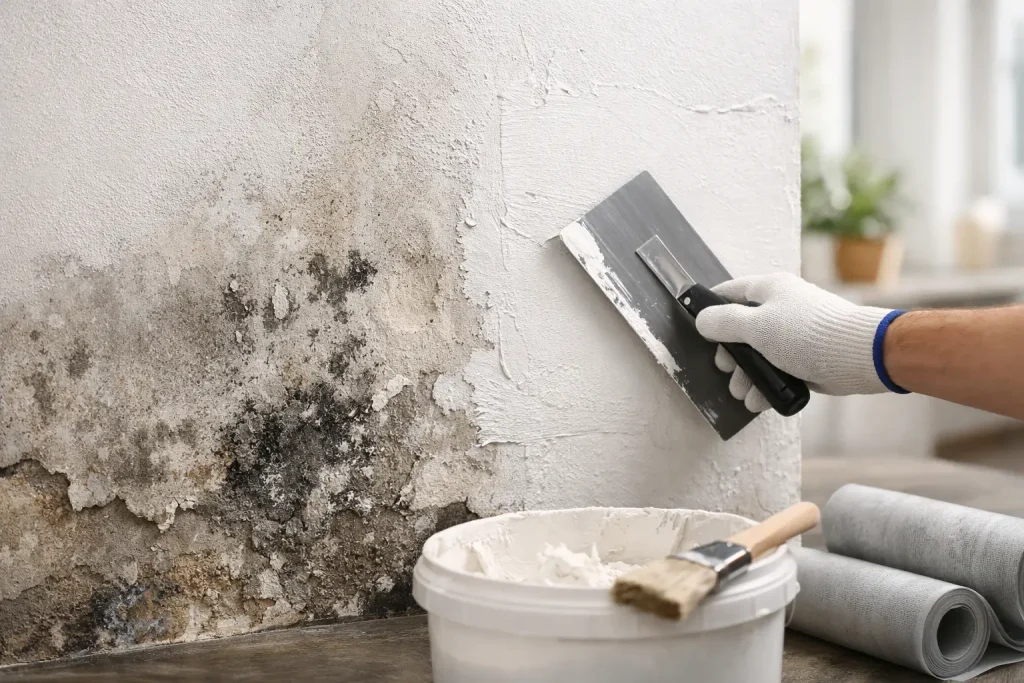
For many ground-floor properties, rising damp is the cause. Moisture from the soil moves up through porous brick, stone, mortar and plaster, often carrying salts with it. The result can be cold walls, flaking paint, crumbling plaster, a musty smell and staining that rises from floor level – commonly up to around 1.5 metres.
A portable dehumidifier may make the room feel drier, but it does not stop ground moisture travelling into masonry. It removes water from the air after damp has already affected the building fabric. That is an expensive cycle to maintain if the real issue is rising damp.
What a complete solution for damp walls must do
The right approach has three jobs: identify the moisture route, stop further upward movement, and allow the wall to dry in its own time. Miss any one of these and the problem is likely to reappear.
First, rule out faults that need conventional repairs. A leaking pipe, blocked gutter, cracked render, failed roof flashing or high outside ground level can all put water into a wall. No damp-control device should be expected to cure an active leak or rain penetration. Repair those defects first.
Next, look for the pattern. Rising damp begins at the base of an external or internal ground-floor wall and works upwards. You may see tide marks, white salt deposits, loose skirting boards, deteriorating plaster or persistent discolouration. Condensation is different: it tends to form on colder surfaces, around windows, behind furniture and in poorly ventilated rooms. It can create mould, but it does not usually produce the salt-contaminated, low-level damage associated with moisture rising through masonry.
The distinction matters because each problem needs a different remedy. Better extraction and ventilation help condensation. Building repairs address penetration. Rising damp requires a method that prevents moisture moving upwards from the ground.
Stop the cause, not the room air
Electronic rising-damp control is designed to address the electrical-potential difference associated with moisture movement from soil into wall materials. The principle is easier to understand than it sounds. Think of static electricity from a hairbrush: an electrical charge can influence how things behave without needing pipes, pumps or chemicals.
A plug-in device operates continuously to counter the conditions that allow moisture to travel upwards through the masonry. Once upward movement is stopped, existing moisture can return down through the wall under gravity. The wall then begins a gradual drying process.
This is why a properly selected electronic device is fundamentally different from an air dehumidifier. A dehumidifier treats humidity in one room and needs regular emptying or drainage. It may be useful while a room dries or where daily moisture production is high, but it cannot deal with moisture already being drawn up through the structure.
A source-led solution is also non-invasive. There is no need to inject chemical creams into every affected wall, strip out large areas of masonry or live with prolonged building work. For homeowners, landlords and facilities teams, that means less disruption and a lower ongoing energy demand than running multiple dehumidifiers day and night.
Choose coverage for the whole building
Damp control must cover the building, not merely the wall with the most obvious stain. Moisture can move through connected masonry, internal partitions and adjoining ground-floor areas. A device placed in the wrong location, or a model too small for the property, can leave part of the building outside its effective working area.
Start with the building type and footprint. A family home generally requires a domestic model designed for house coverage. Larger homes, properties with extensive ground-floor areas, mixed-use premises and commercial buildings may need a higher-capacity unit or more than one device. GUARDIAN offers HOME, PRO 15 and PRO 25 models so coverage can be matched to the size and layout of the premises.
Think of placement in the same way as positioning a Wi-Fi router. The aim is central, useful coverage, not simply placing it beside the worst patch. Thick masonry, extensions, irregular layouts and separated wings can affect the best position. In larger buildings, a planned multi-device arrangement may be more effective than relying on one unit at the edge of the property.
Before ordering, measure the relevant floor area and consider the walls at ground level or at elevated ground-floor level. Include basements where applicable. If the property has been extended, split into separate blocks, or includes commercial areas, treat those features as part of the selection decision rather than an afterthought.
Installation is simple, but positioning matters
The benefit of a self-install system is that it avoids specialist building work. However, simple does not mean careless. Read the instructions for the selected model and mount or position it as specified, in the recommended central location and at the correct height.
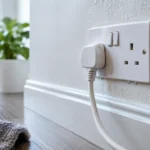
The device must be connected to a suitable mains supply and left operating continuously. Do not place it where it can be damaged, covered, exposed to water or routinely unplugged. A switched socket that someone uses for a vacuum cleaner is a poor choice. Continuous operation is part of the remedy, not an optional extra.
Use a sound electrical installation and follow the product instructions. Where a socket, cable route or electrical condition is in doubt, ask a qualified electrician. This is particularly important in communal premises, commercial settings, damp basements and buildings with older wiring.
Avoid moving the unit repeatedly once installed. The system needs consistent coverage and the wall needs time to respond. Treat it as long-term property protection, much like a smoke alarm or boiler control, rather than a temporary appliance brought out when a patch appears.
Give masonry time to dry
Stopping new moisture from rising is the decisive step. Visible drying comes afterwards, and it cannot be rushed without considering the wall’s condition. Brick, stone, mortar and plaster may have held moisture for years, especially in thick solid walls.
Drying times vary with wall thickness, construction, salt contamination, heating, ventilation, external weather and the severity of the original problem. A wall may improve gradually rather than evenly. The lower section can remain marked even while the moisture level is falling, because salts left behind can continue to attract moisture from the air.
Do not immediately repaint over damaged areas with standard paint. If plaster has blown, softened or become heavily contaminated with salts, it may need to be removed and replaced only after the wall has had adequate time to dry. Reinstating too early can trap the appearance of the problem and lead to another disappointing finish.
Good ventilation and normal, steady heating support the drying process. They are supporting measures, not substitutes for dealing with rising damp. If a room is also suffering from condensation, improve extraction in kitchens and bathrooms, keep furniture slightly away from cold external walls, and avoid drying large amounts of laundry indoors where possible.
Know when a different repair is needed
A complete damp plan is practical because it does not force one answer onto every damp wall. If moisture appears after heavy rain, is concentrated around a chimney breast, or is localised below a damaged gutter, investigate external defects. If a leak is suspected, isolate and repair it. If outside ground is bridging the damp-proof course or sitting too high against the wall, that condition needs correcting.
Likewise, surface mould in bedrooms and bathrooms may be primarily a ventilation and heating issue. Electronic rising-damp control is for moisture rising from the ground through masonry, not every form of household damp.
When the pattern points to rising damp, act before plaster failure, mould odours and damaged finishes become more costly. Choose the right coverage, install the device correctly, keep it powered, and give the building fabric time to release what it has held for too long. A dry wall is not created by hiding the stain – it begins when the moisture route is brought under control.