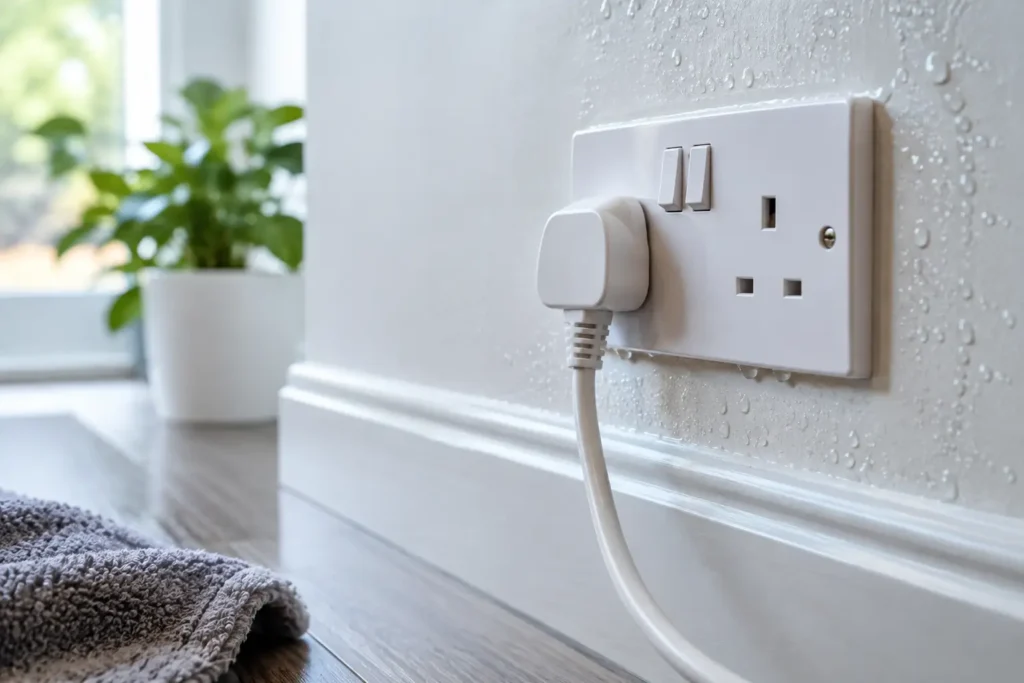
A damp wall and a socket should never be treated as two separate problems. Earthed socket safety matters because moisture, damaged plaster and electrical equipment can create a genuine hazard when ignored. If a wall is cold, staining, crumbling or showing salt deposits, check every nearby socket before plugging in a damp-control device, dehumidifier or extension lead.
In UK homes, the usual term is an earthed socket. It means the electrical installation has a safe path to earth, helping protective devices disconnect the supply if a fault develops. A correctly installed socket will not cure damp, but it is a basic requirement for running electrical equipment safely and continuously.
Why grounded socket safety matters around damp
Electricity and water are an unsafe combination, but the risk is not limited to visible dripping water. Persistent moisture can affect plaster, timber skirting, socket back boxes and cable routes hidden inside a wall. Corrosion may gradually weaken terminals or connections. A loose cover plate, buzzing socket, scorch mark or intermittent power supply needs attention straight away.
Rising damp often appears in the lower part of a wall, commonly up to around 1.5 metres above ground level. This is also where many sockets are installed. The wall may feel cold, paint may blister and salts may push through the finish. Do not assume the socket is safe simply because it still works.
A socket that is dry to the touch can still sit within a damp wall. Equally, a damp-looking patch can be caused by condensation, a leak or penetrating rain rather than rising damp. The cause affects the remedy, but the electrical precaution is the same: do not use a suspect outlet until it has been checked.
Check the socket before connecting equipment
Start with a visual inspection only. Do not remove the socket faceplate or put anything into the outlet. Look for discolouration, cracking, corrosion, loose fittings, condensation, water marks or a musty smell around the socket. If there is any sign of water entering the socket, turn off the relevant circuit at the consumer unit only if it is safe to do so, then contact a qualified electrician.
A normal UK plug has a longer earth pin at the top. This opens the socket shutters and connects the appliance to earth where required. Never cut off an earth pin, force a plug into a damaged socket or use a loose travel adaptor as a permanent solution. These shortcuts can defeat the protection built into the installation.
For a plug-in damp-management device, use a fixed wall socket that is sound, dry and accessible. Avoid placing it where furniture can crush the cable, where a curtain can trap heat, or where a leak could run down the wall and reach the plug. The socket should remain easy to reach so you can inspect it and disconnect the device if needed.
Do not rely on extension leads
An extension lead may seem helpful when the nearest socket is on an affected wall, but it can create another problem. Long cables are easier to damage, are often hidden under rugs, and may be overloaded with several appliances. Multiway adaptors are especially unsuitable when they become a permanent answer to an electrical limitation.
If there is no suitable socket in the correct area, the best solution is usually to have a qualified electrician assess the installation. A new outlet in a dry, practical position is safer than routing cables across a room for months or years.
Earthed sockets, RCDs and modern protection
Earthed socket safety is stronger when several protections work together. Earthing provides a route for fault current. A fuse in the plug protects the appliance cable from excessive current. An RCD, usually fitted in the consumer unit, can disconnect power rapidly when it detects an imbalance that may indicate electricity is flowing somewhere it should not.
These protections reduce risk. They do not make a wet or damaged socket acceptable. An RCD is not a licence to operate equipment in a flooded room, touch wet plugs or ignore a socket affected by leaking water.
If you own an older property, do not guess whether outlets are properly earthed. Some older installations need upgrading, and visible socket style is not proof of what is behind the wall. An electrician can test polarity, earthing and RCD protection properly. This is particularly worthwhile in basements, ground-floor rooms, converted outbuildings and rental properties where electrical use may be heavier or less consistent.
Landlords and property managers should also keep electrical inspections current and act quickly on tenant reports of damp near switches or sockets. Damp damage develops slowly, but electrical faults do not always give much warning.
Safe placement for a plug-in damp solution
A plug-in device designed to address rising damp should be installed exactly as its instructions specify. Coverage works more like Wi-Fi than like a fan heater: location matters. A central position helps the signal reach the masonry effectively, while an unsuitable position may reduce its useful coverage.
Before choosing the location, check three things: the socket is dry and undamaged, the cable is not under strain, and the device has adequate ventilation around it. Do not cover it with clothes, boxes or furnishings. Keep it away from direct splashing, active leaks and areas where cleaning water may collect.
GUARDIAN damp removal devices are intended to operate continuously at very low energy use, so the quality of the outlet matters for long-term operation. The goal is not to keep emptying a dehumidifier or merely dry the air around a damp wall. It is to support a source-focused approach to rising damp while using a safe, reliable electrical connection.
That said, a device cannot solve a plumbing leak, failed guttering, flood damage or water entering through defective external masonry. Deal with active water entry first. If moisture is reaching electrical fittings, isolate the risk and have both the electrical fault and the building defect assessed.
When to stop and call an electrician
Do not continue using the socket if the plug feels unusually hot, the outlet crackles, the faceplate is loose, the power cuts in and out, or you notice burning smells or dark marks. Switch off the circuit at the consumer unit if safe, keep people away from the area and arrange professional help.
The same applies after a leak or flooding event. Even once surfaces look dry, water may have reached concealed wiring or socket boxes. Drying the room with heaters or a dehumidifier is not a substitute for an electrical inspection.
For routine peace of mind, keep sockets clear, check plugs and leads during normal cleaning, and replace damaged accessories rather than taping them up. Use equipment with the correct UK plug and fuse, and follow the manufacturer’s placement instructions rather than improvising around an unsuitable outlet.
A dry, sound wall is the aim, but safe power comes first. When a socket is properly earthed, dry and in good condition, your damp-control equipment can work continuously as intended – without adding a preventable electrical risk to an already difficult property problem.