A damp patch that keeps returning at the bottom of a wall is not a decorating problem. It is a warning that moisture may be moving through the masonry. Knowing how to stop rising damp starts with identifying the source correctly, because a dehumidifier, fresh paint or mould spray will not stop water entering a wall.
Rising damp can damage plaster, lift wallpaper, leave white salt marks and create the cold, stale smell many owners notice first. Left alone, it can make ground-floor rooms unpleasant to use and add to long-term maintenance costs. The good news is that the right approach is practical: rule out other water sources, correct defects, then use continuous protection designed for the building.
What rising damp looks like
Rising damp is moisture travelling upwards from the ground into porous brickwork, stone or mortar. It normally affects the lower part of an external or internal wall connected to the ground, often up to around 1.5 metres high.
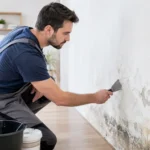
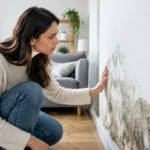
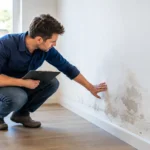
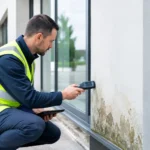
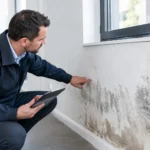
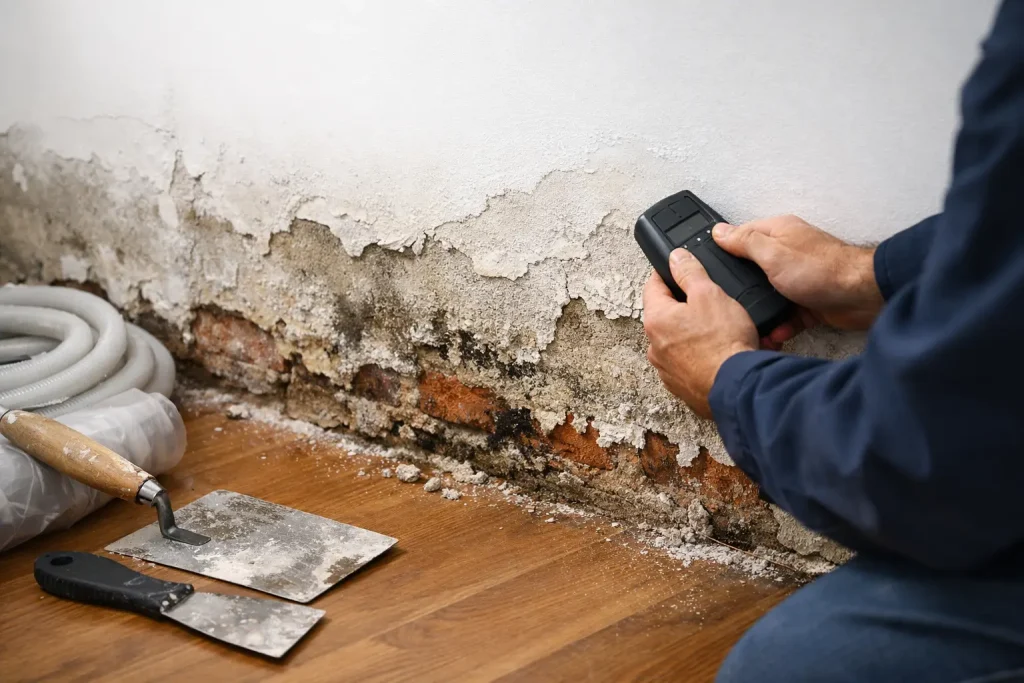
Typical signs include a horizontal tide mark, bubbling paint, crumbling or hollow plaster, peeling wallpaper and a white powder on the wall surface. That powder is salt carried from the ground and left behind as moisture evaporates. Skirting boards may soften or rot, and the wall can feel noticeably colder than the room around it.
These symptoms matter because they are persistent. Condensation tends to appear on colder surfaces, particularly windows, corners and behind furniture. Rising damp usually begins at the base of the wall and gradually works upwards. The distinction is not perfect, however. A building can have both problems at the same time.
Check the cause before you treat the wall
Do not assume every low-level damp mark is rising damp. Water can enter a property in several ways, and treating the wrong cause wastes time and money.
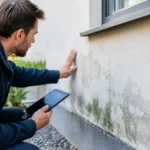
Start outside. Check that gutters are not overflowing, downpipes are connected and directing water away, and external ground levels have not been raised above the damp-proof course. Look for cracked render, damaged pointing, leaking pipes and drains, or soil and paving piled against the wall. Any defect allowing rainwater to sit against masonry must be repaired first.
Then look indoors. A leak from a radiator pipe, washing machine connection or bathroom can soak a wall from one side. Condensation is more likely where ventilation is poor, clothes are dried indoors or a room is kept unheated for long periods. A musty smell alone does not confirm rising damp.
If the pattern remains concentrated along the bottom of a ground-connected wall, with salts and deteriorating plaster, rising damp is a strong possibility. For a large building, unusual construction, listed property or clear signs of structural damage, obtain a proper damp investigation rather than relying on a quick visual guess.
Why air dehumidifiers do not stop rising damp
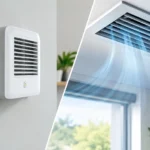
An air dehumidifier can reduce moisture in the air. That may make a room feel more comfortable and can help manage condensation, especially while a property is drying. But it does not stop water being drawn into masonry from the ground.
Think of it this way: an air dehumidifier collects moisture after it has evaporated into the room. Rising damp needs to be addressed in the wall itself. If the route from soil to masonry remains active, the wall can continue drawing in moisture and salts even while a dehumidifier runs nearby.
This is why owners often find themselves emptying a water tank every day while the lower wall still flakes and stains. It is symptom management, not a complete answer to the source of rising damp.
How to stop rising damp with a clear plan
A successful solution has two parts. First, remove external defects or leaks that are adding water to the structure. Second, stop the ongoing upward movement of ground moisture through the wall.
Traditional options can include installing or repairing a physical damp-proof course, improving drainage and removing contaminated plaster once the wall has dried. These methods can be appropriate, but they may involve drilling, chemical injection, excavation or significant redecoration. The right choice depends on the construction, access and condition of the property.
For homeowners and managers who want a non-invasive approach, electronic rising-damp control is designed to provide continuous protection without cutting into walls. GUARDIAN damp removal devices work by addressing the electrical-potential difference associated with moisture movement in masonry, helping existing wall moisture return towards the ground through gravity.
It is a simple principle, similar to static electricity from a hairbrush, applied to the building fabric. Once the device is operating, the wall still needs time to release the moisture already stored within it. Drying is gradual, not instant, but the goal is to stop feeding the problem and allow the structure to recover.
Choose coverage for the building, not just one room
Rising damp is a building-level issue. Installing a device only where the stain is visible may not protect all the affected masonry. Coverage should be selected according to the size, layout and type of property.
For a typical family house, a HOME model may be suitable. Larger houses, converted buildings, commercial premises and properties with broad ground-floor footprints may require PRO 15 or PRO 25 coverage. The numbers and device choice should be matched to the protected radius and the building plan, rather than guessed from the size of one damp room.
Walls, floors and internal partitions can affect how a property is laid out, so placement matters. Treat the device like a Wi-Fi router: it needs a sensible central position for the area being protected, not a hidden location chosen solely because it is close to a socket.
Position and install it correctly
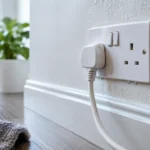
Place the unit in accordance with its installation guidance, generally in a central part of the building and at the recommended mounting height. Keep it connected continuously to a suitable mains supply. Switching it off overnight, during holidays or to save a small amount of electricity removes the continuous protection the system is intended to provide.
Do not place it directly next to a large metal object, behind dense shielding or in a location that does not serve the building’s main ground-connected area. In larger premises, consider the shape of the property as well as floor area. A long, narrow building may need a different arrangement from a compact square one.
The practical advantage is that installation is straightforward. There is no need to strip the wall, inject chemicals or run a noisy appliance with a tank to empty. Once fitted, the device operates quietly with low energy use while the drying process continues.
Let the wall dry before redecorating
One of the most common mistakes is repainting too early. A wall affected by rising damp may contain moisture and salts built up over years. Even after upward moisture movement is controlled, those materials need time to dry and stabilise.
Drying time depends on wall thickness, construction, ventilation, heating, season and the level of saturation. A thin internal wall may improve sooner than a solid external stone wall. Do not judge progress only by how dry the surface feels on one day. Look for steady improvement: fewer damp marks, firmer plaster, reduced odour and no new low-level staining.
Where plaster has been badly damaged or contaminated by salts, it may need to be removed and replaced after the wall has dried sufficiently. Use breathable finishes where appropriate, and avoid simply sealing a wet wall behind thick waterproof paint. Trapped moisture can push paint off again and hide a problem that still needs attention.
Ventilate rooms normally and maintain sensible background heating. This supports drying and reduces condensation, but remember that ventilation alone will not stop true rising damp. It is a helpful part of recovery, not the main cure.
Keep monitoring the property
After treatment, check the wall periodically rather than expecting a one-day transformation. Photograph the affected area before work begins, then compare it at regular intervals. This gives you a clearer record than relying on memory, particularly in tenanted or commercial properties.
Keep gutters, drains and external ground levels under control. If a new patch appears higher on the wall, around a window or after heavy rain, investigate for a separate water-entry defect. Rising damp and penetrating damp can occur together, and each needs its own remedy.
A dry, usable property does not come from covering stains. It comes from stopping the moisture route, giving masonry time to recover and keeping the protection in place. Start with the cause, be patient with drying, and let the wall do what it should: stay dry from the ground up.