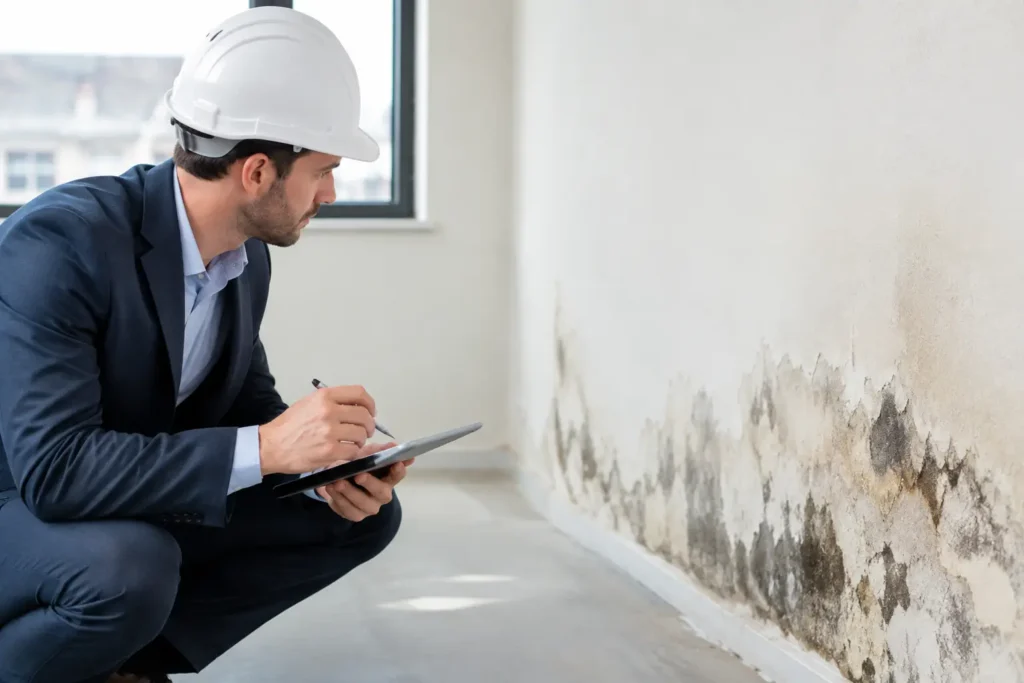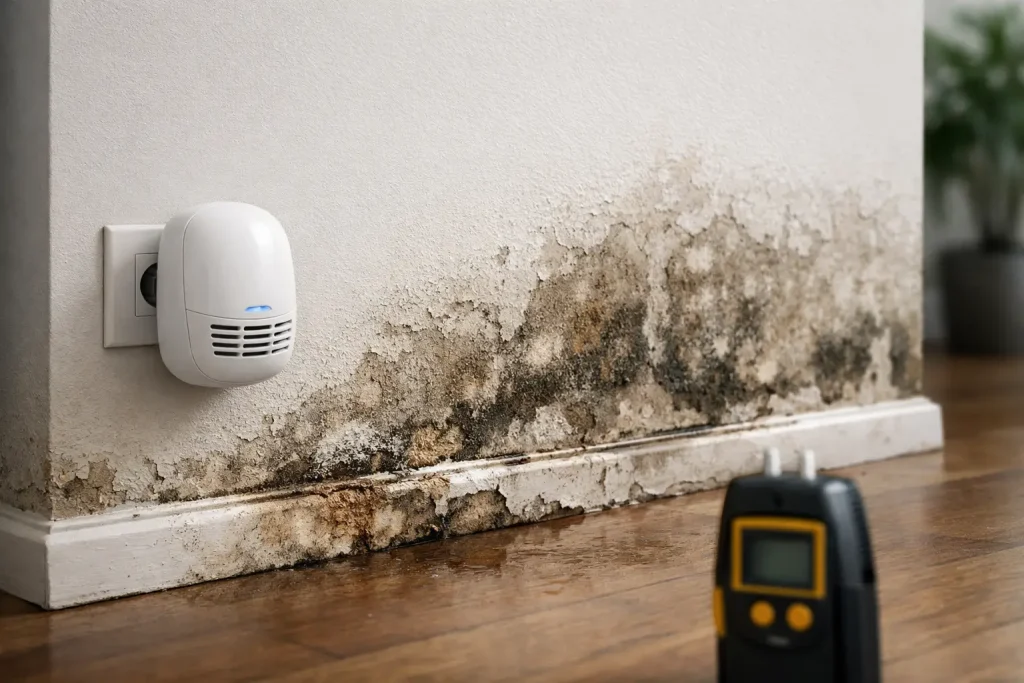
A wall that feels cold, smells musty and shows peeling paint up to around 1.5 metres from the floor is not simply asking for more ventilation. It may be rising damp. So, do plug-in damp removers work? They can be an effective, non-invasive answer when the moisture is genuinely rising from the ground through the masonry, rather than coming from condensation, a leak or rain penetration.
The key is matching the remedy to the cause. A plug-in electronic damp remover is designed to address moisture moving upwards through walls. An air dehumidifier removes water from the air. Both have a place, but they are not interchangeable.
Do plug-in damp removers work on rising damp?
Electronic damp-removal devices work by addressing the electrical potential involved in moisture travelling from the soil into a wall. Masonry, ground water and minerals can create a small electrical imbalance, encouraging moisture to move upwards through pores in bricks, stone and mortar.
A plug-in device is designed to neutralise that imbalance. Once the upward movement is stopped, the moisture already held in the wall can gradually return towards the ground through gravity. Think of it like switching off a tap before dealing with a wet floor. Drying the floor first may improve the appearance, but it does not stop more water arriving.
This is why a correctly selected and positioned unit can be a practical alternative to disruptive damp-proof injections or repeated replastering. It operates continuously, uses very little electricity and does not require walls to be drilled, stripped or chemically treated.
However, no electronic device can repair a leaking gutter, failed flashing, cracked render or broken water pipe. It will also not solve condensation caused by daily showers, cooking, drying clothes indoors or poor ventilation. A proper diagnosis comes first.
First, make sure it is rising damp
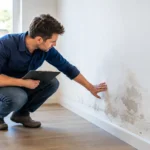
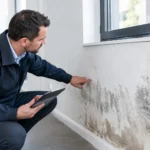
Rising damp normally starts at ground level and travels upwards. The visible signs are often concentrated on the lower part of an external or internal ground-floor wall. You may see tide marks, flaky paint, crumbling plaster, white salt deposits, damaged skirting boards or a persistent earthy smell.
The pattern matters. Condensation is more commonly found on cold surfaces, around windows, in corners, behind wardrobes and in bathrooms. It often gets worse during colder weather, when warm indoor air meets a cold wall. Penetrating damp can appear at any height and may worsen after heavy rain. Plumbing leaks are usually more localised and can remain wet regardless of the season.
A simple rule is useful: if the damage begins at the base of the wall and rises in a fairly even band, rising damp is a strong possibility. If damp patches begin high up, around a chimney breast or beneath a roofline, look for another source before choosing a rising-damp treatment.
Why an air dehumidifier is not the same solution
Air dehumidifiers can be useful. They reduce airborne humidity, help laundry dry indoors and can make a room feel more comfortable where condensation is the problem. They are particularly helpful during the drying period after a rising-damp solution has been installed.
But a dehumidifier does not stop ground moisture entering masonry. It collects water from the air in the room, not water being drawn up inside the wall. If the wall is still receiving moisture from below, the machine can become an expensive way to manage the symptoms while the source remains active.
That distinction matters for landlords and property managers. Repainting a damp wall, running a dehumidifier and replacing damaged plaster may create a short-lived improvement. If the cause is rising damp, the damage can return. Source control gives the wall the chance to dry properly and stay dry.
What results should you expect?
Drying takes time. A wall that has held moisture for years will not become dry in a weekend. Once the upward movement of moisture is controlled, existing water needs to leave the masonry naturally. The pace depends on wall thickness, construction, salt contamination, ventilation, room temperature and how wet the wall was before treatment.
In many properties, visible improvement develops gradually over several months. Heavily saturated solid walls may take longer. A useful expectation is steady progress, not an instant cosmetic transformation.
During this period, allow normal airflow through the room and maintain sensible heating. Do not cover affected walls with impermeable wallpaper, vinyl paint or large furniture pushed tightly against the surface. These can slow evaporation and hide the condition of the wall.
Salt-contaminated plaster may also need attention once the wall has dried. Salts left behind by historic moisture can continue to attract water from the air and leave marks even after the original rising damp has been stopped. This does not automatically mean the device is failing. It may mean the wall finish has reached the end of its life and requires suitable remedial plastering or redecorating.
Correct placement makes the difference
Plug-in damp removers are not fit-and-forget in the sense that any socket will do. The device needs to be placed in a suitable central location for the area it is intended to protect, with the correct model chosen for the size and layout of the building.
Coverage works rather like a Wi-Fi router. A centrally placed unit has the best chance of reaching the surrounding walls. Thick masonry, extensions, split levels and unusually shaped layouts can affect how many devices are needed. Larger homes, commercial premises and buildings with separated sections may require more than one unit or a higher-capacity model.
Choose the device according to the coverage radius, not simply the number of rooms. For example, a family house may suit a HOME model, while larger residential or commercial properties may need a PRO 15 or PRO 25 arrangement. The aim is continuous protection across the relevant ground-floor wall area.
The unit should remain plugged in permanently. Its low power use is part of the appeal, but continuous operation is essential because the building remains in contact with the ground every day. Do not switch it off when leaving for a holiday or unplug it to free up a socket.
When a plug-in damp remover may not be enough
A sound damp strategy starts with basic building maintenance. Check that gutters are clear, downpipes discharge properly, external ground levels are not bridging the damp-proof course and air bricks are unobstructed. Deal with plumbing leaks and rainwater defects first.
There are also buildings where the diagnosis needs extra care. Basements can be affected by lateral water pressure from surrounding soil, which is different from rising damp. Older properties may have mixed wall materials, previous tanking work or historic alterations that complicate moisture movement. Listed buildings and severe structural deterioration should be assessed with appropriate professional advice.
For ordinary rising damp in a house, flat or managed property, an electronic system offers a straightforward route: install the right device, leave it operating, give the walls time to dry and repair finishes only when the underlying moisture has reduced. GUARDIAN damp removal is designed around that practical approach, with models matched to property size and clear installation guidance.
A dry wall is not just about better-looking paint. It helps protect plaster, timber skirtings, furnishings and the comfort of the people using the building. Start by identifying where the moisture begins, then choose a treatment that stops it at the source rather than merely collecting the symptoms from the air.