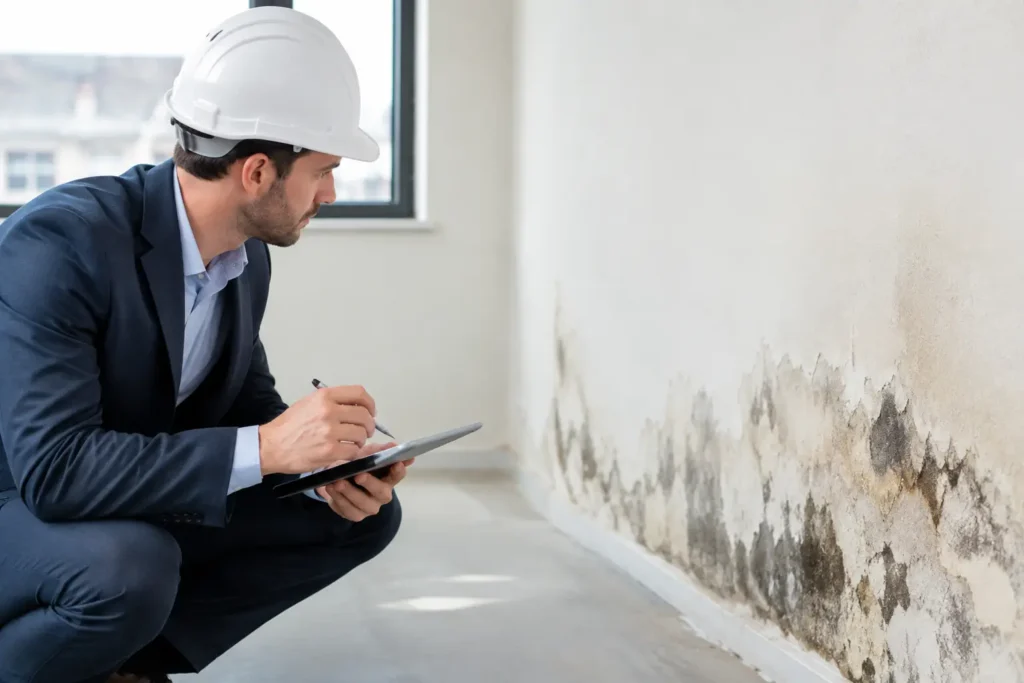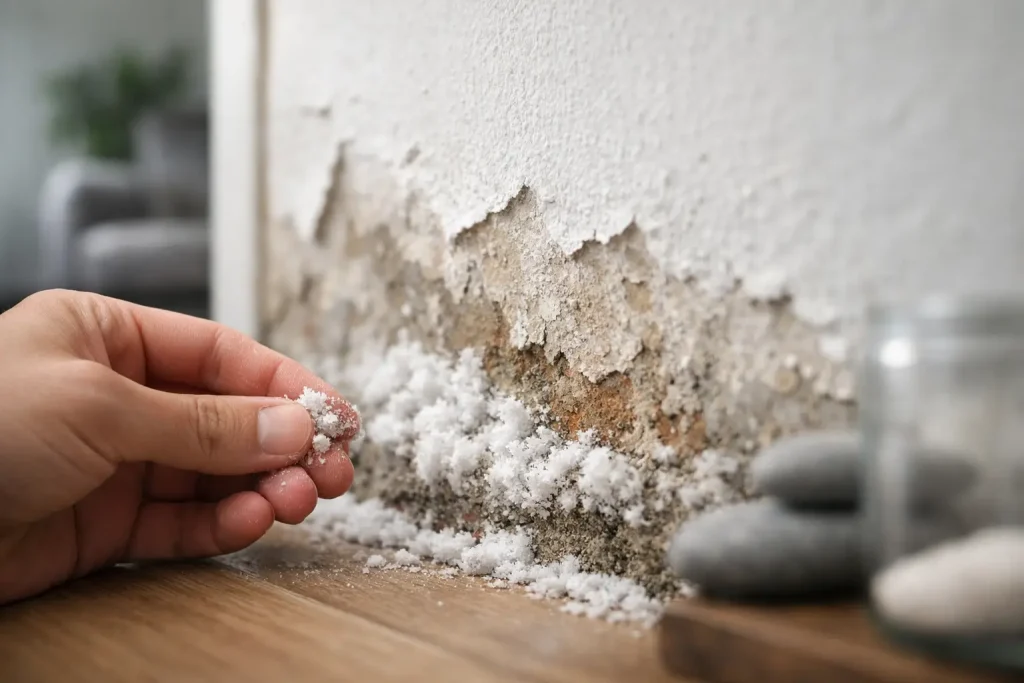
A white, powdery mark on a wall is not simply a decorating problem. If you are asking what causes salt deposits on walls, the short answer is moisture moving through masonry. The longer answer matters, because cleaning the wall without stopping that moisture will usually leave you facing the same damage again.
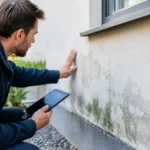
Salt deposits often appear on ground-floor walls, in basements, near chimney breasts and around old plaster. They can look like white dust, crystals or fluffy patches. Paint may bubble, plaster may soften or crumble, and the room can begin to feel colder. These are useful clues – but the salt itself does not identify the cause. You need to establish where the water is coming from.
What causes salt deposits on walls?
Bricks, mortar and plaster contain tiny pores. When moisture enters the wall, it can dissolve naturally occurring salts in the building materials, soil or previous contamination. As the moisture travels towards the wall surface and evaporates, it leaves those salts behind.
This process is called efflorescence. The visible white deposit is the residue left after water has gone. It is a warning that the wall has been wet, not proof that the wall is currently dry.
In many properties, persistent deposits low down on an internal wall point to rising damp. Ground moisture is drawn into porous masonry and can travel upwards through capillary action, carrying salts with it. Think of a sponge standing in a shallow tray of water: the water slowly climbs through its tiny spaces. Masonry can behave in a similar way.
Rising damp commonly affects walls from floor level to around 1.5 metres high. The exact height depends on the wall construction, the amount of ground moisture, evaporation, heating and ventilation. A tidy horizontal band of flaking paint, damp staining and salts near the base of a wall deserves prompt attention.
The main moisture sources to check
Rising damp is a common cause, but it is not the only one. Treating the wrong problem wastes time and can lead to unnecessary work.
Ground moisture and rising damp
A failed, damaged or bridged damp-proof course can allow moisture from the ground to enter the wall. Bridging happens when soil, paths, render, debris or an internal floor level sits too high and creates a route around the damp-proof course.
Older buildings may not have an effective damp-proof course at all. In these properties, salts may have been building up in the wall for years. Even after the moisture source is controlled, contaminated plaster can continue to attract water from the air and show renewed staining.
Rain penetration from outside
Salt deposits can also form when rain repeatedly enters through defective brickwork, cracked render, failed pointing, blocked gutters or leaking downpipes. This is usually more localised than rising damp. You may see it higher up a wall, beneath a gutter line, around a window opening or on an exposed external elevation.
Check the outside of the property after heavy rain. Overflowing gutters and downpipes discharging close to the wall are simple faults with serious consequences. A wall cannot dry properly if it is being soaked every time it rains.
Plumbing leaks and internal water damage
A slow leak from a pipe, radiator valve, shower tray or appliance can saturate a wall from inside. The affected patch may appear at any height and often becomes worse regardless of weather. Salts may be present, but the shape and position of the damage normally follow the leak rather than a clear line from the floor upwards.
If the area is close to a bathroom, kitchen, utility room or heating pipework, rule this out first. A moisture meter can indicate that a wall is damp, but it cannot always tell you why. A practical inspection of plumbing is still essential.
Condensation and poor ventilation
Condensation occurs when warm, moist air meets a cold surface. It is more likely on windows, external corners, behind furniture and in rooms with poor ventilation. It usually causes mould before it causes significant salt deposits.
This distinction is useful. An air dehumidifier can reduce airborne humidity and help manage condensation, but it does not stop water rising through a wall from the ground or penetrating through defective masonry. If salts keep returning at low level, look beyond the room air.
Why salts damage plaster and paint
Salt crystals take up more space than the dissolved salts inside the wall. As they form and reform, they put pressure on paint, plaster and mortar. That is why a wall may blister, shed paint, feel gritty or lose sections of plaster.
Some salts are hygroscopic, meaning they attract moisture from the air. This can make a wall appear damp even when the original water source has reduced. It also explains why repainting too early often fails. Fresh paint can trap moisture or be pushed off by ongoing salt activity.
Do not rely on appearance alone. A wall may look better in warm weather because evaporation has increased, while the moisture pathway below remains active. Equally, a white bloom may be old residue left after a historic leak. The pattern, height, location and condition of the wall all need to be considered together.
How to identify the likely cause
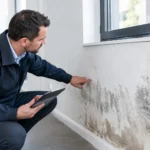
Start by noting where the deposits occur. Low-level deposits that run along a ground-floor wall, especially with damaged skirting boards or crumbling plaster, are consistent with rising damp. Isolated patches high on a wall are more likely to be linked to rain entry, a roof defect or plumbing.
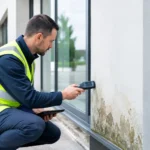
Then inspect both sides of the wall. Outside, look for high ground levels, blocked air bricks, damaged pointing, cracked render, leaking gutters and downpipes. Inside, look for plumbing routes, mould growth, poor extraction and furniture pressed tightly against cold external walls.
It also helps to consider timing. Damage that worsens after rainfall suggests penetrating damp. Damage that is constant around a pipe route suggests a leak. Damage concentrated from floor level upwards, with white salts and persistent plaster failure, requires a rising-damp assessment.
For landlords and property managers, record photographs and dates. This creates a useful pattern across seasons and helps separate a one-off incident from a continuing moisture problem.
What to do about salt deposits on walls
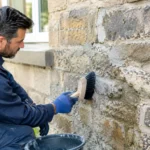
First, remove loose surface salts with a dry, stiff brush and collect the residue rather than brushing it into the room. Avoid washing the wall with lots of water. Adding more water can dissolve and move salts deeper into the surface.
Next, fix the moisture source. Repair leaks, clear gutters, correct drainage and address obvious external defects. Where rising damp is the cause, the wall needs a solution aimed at preventing ground moisture from continuing to travel through the masonry. Surface treatments and repeated repainting are not a cure.
Once the source is controlled, allow time for the wall to dry. Thick masonry does not dry overnight. Drying time depends on wall thickness, previous saturation, heating, ventilation and the season. Damaged plaster may need to be removed and replaced with a suitable salt-resistant system after the wall has begun to stabilise.
A GUARDIAN damp removal device is designed for properties where rising damp is the confirmed issue, addressing the electrical potential associated with moisture movement through masonry rather than simply drying the room air. Correct model choice and central placement matters, particularly in larger homes and commercial buildings, because coverage must reach the affected walls.
When not to redecorate yet
Wait before applying standard paint if the wall is still damp, salty, soft or actively flaking. Decorative finishes can conceal warning signs briefly, but they cannot withstand continued moisture and crystallising salts.
If you must make the area presentable while it dries, use a breathable temporary finish only where appropriate and follow the product guidance. Do not seal the wall with impermeable coatings in the hope of locking the problem away. Moisture can then be forced to find another route or cause further failure behind the finish.
Salt deposits are the wall’s evidence. Read the pattern, find the water source and stop it there. Once the masonry is allowed to dry properly, repairs and decoration have a far better chance of lasting.