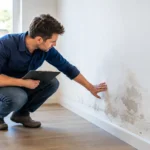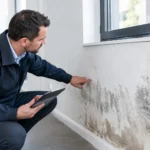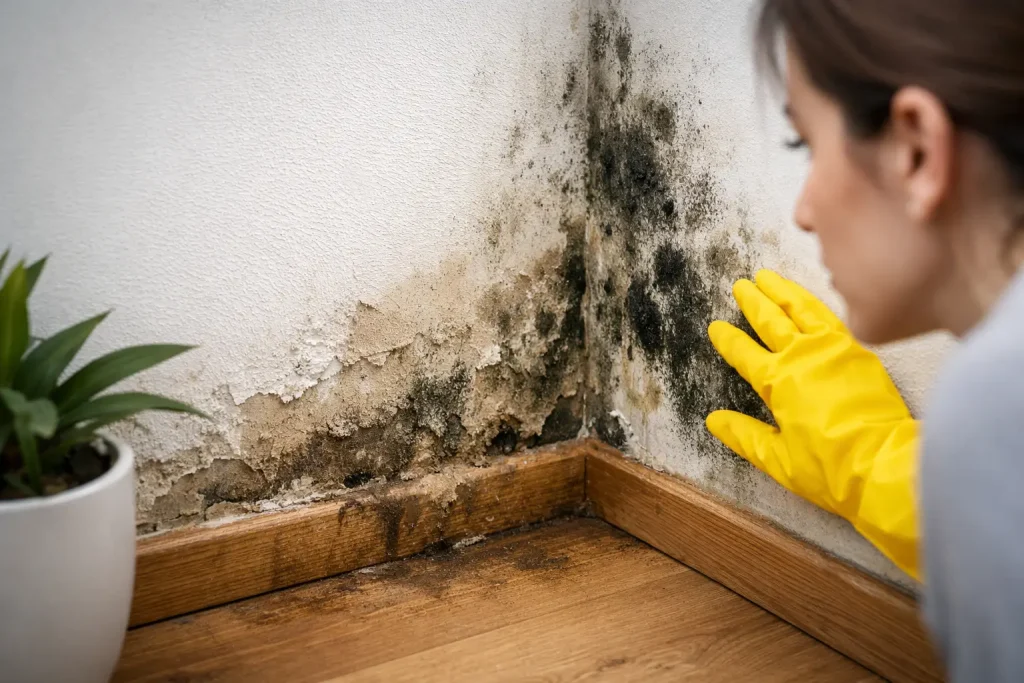
A black patch behind the sofa is rarely just a cleaning problem. If the wall feels cold, plaster is crumbling or marked with white salts, and the damage starts low down, you need to ask: can rising damp cause mould? Yes. Rising damp can create the continuously wet wall conditions that allow mould to grow, especially in ground-floor rooms, basements and older properties.
Cleaning the visible mould may improve the appearance for a short time. It does not stop the moisture entering the wall. Until the source is controlled, mould can return.
Can rising damp cause mould on walls?
Rising damp occurs when ground moisture travels upwards through porous brickwork, mortar and plaster. Masonry contains tiny capillaries, rather like a bundle of very fine drinking straws. Where the conditions allow, moisture can move up from the ground and carry salts with it.
As the wall becomes damp, its surface temperature often drops. Warm air inside the room then meets that colder surface, and condensation can form. Mould spores are always present in normal indoor air. Give them moisture, a cool surface and a little dust or wallpaper paste to feed on, and they can grow.
This is why mould linked to rising damp may appear as dark spotting, grey-green patches or a persistent musty smell. It is common behind furniture, along skirting boards, in corners and on lower sections of external walls. In more established cases, you may also see bubbling paint, loose wallpaper, decayed timber skirtings or powdery white salt deposits.
Mould is not guaranteed in every damp wall. Good airflow, a warmer room and a breathable finish can delay it. But a wall that remains wet from below is always at risk, and the problem tends to worsen through colder months.
The signs that point to rising damp rather than simple condensation
Condensation mould and rising-damp mould can look similar at first. The difference is usually in the pattern of damage.
Condensation is most likely on cold surfaces where indoor moisture gathers: window reveals, corners, ceilings, behind wardrobes and around poorly ventilated bathrooms. It may be worse after cooking, showering, drying clothes indoors or overnight in occupied bedrooms.
Rising damp usually begins at the base of a ground-floor wall and can affect plaster up to around 1.5 metres. A horizontal tide mark, damaged plaster, flaking paint and salts are stronger clues than mould alone. Walls may feel damp or unusually cold at low level, while the upper part of the wall remains comparatively sound.
There are exceptions. A leaking pipe, bridged or damaged damp-proof course, blocked guttering, high external ground levels, cracked render or water entering through a wall can all create similar symptoms. That is why guessing is expensive. The visible mould is the alarm bell, not the diagnosis.
Why an air dehumidifier does not fix rising damp
An air dehumidifier can be useful when humidity is high. It removes water from the air and may reduce surface condensation while it is running. In a laundry room or a poorly ventilated bedroom, that can make a real difference.
But an air dehumidifier does not stop ground moisture moving through the wall. It treats airborne humidity, not the route bringing water into the masonry. If rising damp is the cause, the wall can continue absorbing moisture from below, releasing it gradually into the room and staying cold enough to support mould growth.
This is the frustrating cycle many property owners recognise: empty the dehumidifier tank, wipe the mould, repaint the wall, then find the staining and smell returning. The room may feel drier for a while, but the source has not been dealt with.
Use ventilation and dehumidification as supporting measures where needed. Do not mistake them for a permanent remedy for moisture rising through the structure.
Stop the moisture before treating the mould
The correct order matters. First identify and control the moisture source. Then allow the wall to dry. Only after that should you repair finishes and redecorate.
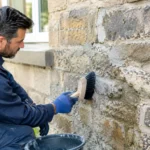
Start by checking the outside of the property. Soil, paving or decking should not bridge the damp-proof course. Gutters and downpipes should discharge properly, and external walls should not be constantly soaked by overflowing water. Look for obvious leaks, damaged pointing and cracks that could be allowing rain penetration.
Inside, move furniture a short distance away from affected walls so air can circulate. Avoid pressing wardrobes, sofas or storage units tightly against cold, damp masonry. Keep the room gently heated and ventilated, but do not rely on opening windows alone to solve a wall that is drawing water from the ground.
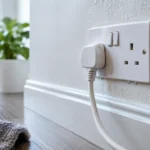
For persistent rising damp, the goal is to address the electrical conditions that allow moisture to travel through masonry. GUARDIAN damp removal devices are designed to work continuously at the source, helping existing wall moisture return to the ground through gravity rather than continuing its upward path. This provides a non-invasive option for homeowners and property managers who want to avoid disruptive work.
What happens while a damp wall dries?
Drying is not instant. A wall that has held moisture for months or years needs time to release it. The drying period depends on wall thickness, construction, salt contamination, heating, ventilation and how severe the damp was before treatment.
During this period, old salts can remain visible and may attract moisture from the air. Plaster that has already broken down will not repair itself simply because the wall begins drying. It may need to be removed and replaced once the underlying moisture issue has been brought under control.
Do not rush to seal the wall with heavy waterproof paint. Non-breathable coatings can trap moisture and hide symptoms temporarily, making later repairs harder to assess. Choose finishes appropriate for a wall that is still drying, and wait until moisture levels have properly reduced before final decoration.
Mould should be cleaned carefully using a suitable mould treatment, following the product instructions and ensuring the room is ventilated. Wear gloves and avoid dry brushing, which can disturb spores. If mould covers a large area, keeps returning quickly or affects vulnerable occupants, seek professional advice.
Choosing the right response for your property
A small patch of mould in a steamy bathroom may be a ventilation issue. Mould running from skirting level upwards, combined with salts and failing plaster, calls for a closer look at rising damp. A property can also have both problems at once: damp walls from below and condensation from everyday indoor moisture.
For a house, flat or commercial building, match the solution to the affected area and the building layout. Coverage matters, particularly in larger properties or where walls extend across several rooms. A continuously operating, low-energy system should be positioned according to the manufacturer’s instructions, with a suitable mains supply and clear consideration of the building’s footprint.
The key point is simple: do not keep treating a mould patch as though it is the cause. When rising damp is feeding the wall, stopping that moisture movement gives the wall its chance to dry, the room its chance to feel warmer, and mould far less reason to return.
If you can see damp damage rising from floor level, act before another coat of paint hides the warning signs. A dry wall is easier to maintain, healthier to live with and far less likely to become a home for mould again.