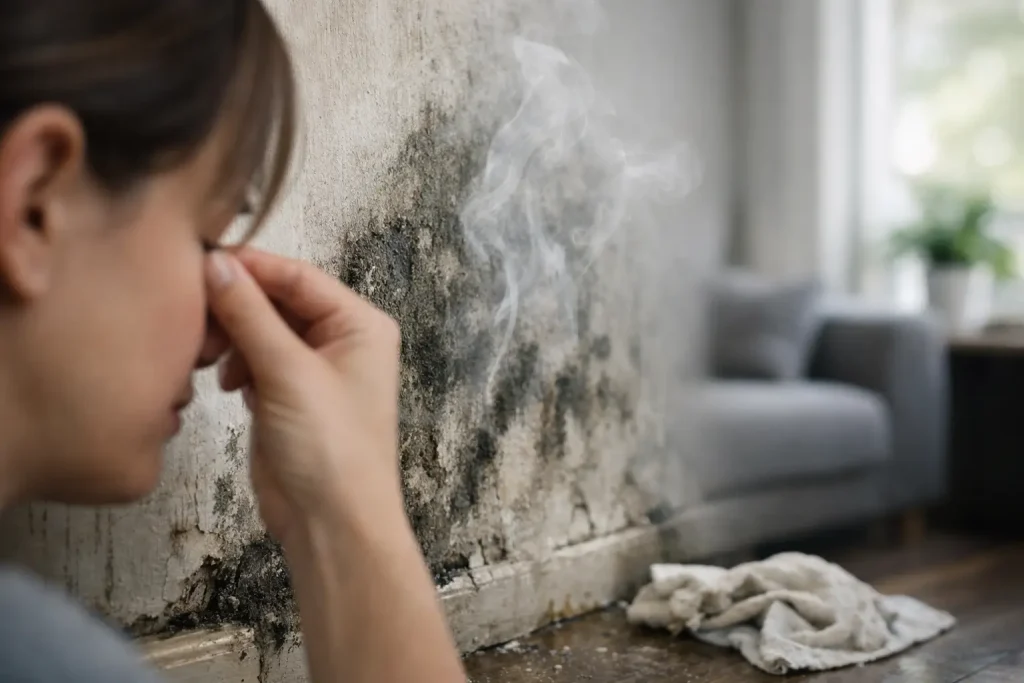
A musty smell from damp walls is not a cleaning problem. It is a warning that moisture has been sitting within the wall, plaster, timber or floor edge long enough for fungal growth and stale air to develop. Air fresheners may cover it for an afternoon. Opening windows may help briefly. Neither removes the water feeding the smell.
The right response is to find where the moisture is coming from. A damp wall can be caused by a leak, condensation, penetrating rain or rising damp. These problems can look similar at first, but they need different remedies. Treating the wrong cause wastes time and can allow plaster, paintwork and timber to deteriorate further.
Why damp walls develop a musty odour
A musty odour is produced when moisture remains trapped in porous materials. Brick, mortar, plaster, wallpaper backing, skirting boards and floor coverings can all hold water. In a poorly ventilated room, that moisture creates the conditions in which mould and fungi thrive.
You may not always see mould straight away. It can be behind furniture, beneath wallpaper, under laminate flooring or within a cavity around a damaged section of plaster. The smell is often strongest when a room has been shut overnight, after wet weather, or when heating first comes on.
Do not assume the smell has come from the air alone. A portable dehumidifier can reduce airborne humidity and make a room feel more comfortable. However, it does not stop water entering masonry from below ground, through an outside wall or from a leaking pipe. If the source remains active, the musty smell is likely to return.
Musty smell from damp walls: identify the source
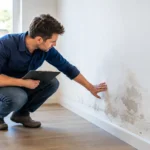
Start by looking at the position and pattern of the damp. Rising damp usually begins at ground-floor level and moves upwards through the masonry. Typical signs include damp or damaged plaster up to around 1.5 metres high, white salt deposits, peeling paint, crumbling skirting boards and cold wall surfaces near the floor.
The pattern matters. Rising damp often creates a horizontal band of damage along the lower part of an internal or external wall. It may affect several adjoining walls, particularly in older properties or rooms built directly over soil. A basement or elevated ground-floor room can also be affected where moisture is travelling through connected masonry.
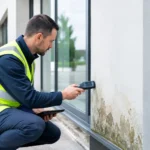
A localised patch higher up the wall is less likely to be rising damp. Check for a leaking gutter, cracked render, damaged roof tile, overflowing drainpipe, failed window seal or external ground level that has bridged a damp-proof course. If the patch becomes worse after rainfall, penetrating damp is a more likely explanation.
If the problem is concentrated around a radiator, bathroom, kitchen, washing machine or pipe route, investigate plumbing first. A slow leak can soak a wall for months without producing a dramatic drip. Look for changes in water pressure, staining around pipework, loose flooring and unusually soft plaster.
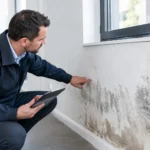
Condensation is different again. It tends to form on cold surfaces, especially in bathrooms, bedrooms, kitchens and poorly ventilated corners. Black mould around windows, ceilings and external-wall corners often points to condensation. Better extraction, controlled heating and sensible ventilation can make a real difference here.
It is also possible to have more than one issue. A cold, damp wall caused by rising damp can attract condensation, making mould and odour worse. That is why a proper diagnosis comes before any treatment.
Why masking the smell does not solve it
Bleach, mould sprays, scented candles and fresh paint can make a room appear improved. They do not dry saturated brickwork. Painting over damp plaster can trap moisture behind the finish, and it may lead to bubbling, flaking and another round of repair work.
Removing visible mould is sensible, provided you use appropriate protection and follow product instructions. But mould is a symptom. If the wall stays wet, spores can reappear on the new surface or nearby materials.
A dehumidifier has a useful role when there is high humidity from cooking, showers or drying clothes indoors. It removes water from the air in the room where it operates. It cannot reverse the route by which ground moisture travels up through a wall. This distinction is crucial when the lower wall is wet, salty and deteriorating.
Address rising damp at the wall’s source
Rising damp is linked to an electrical-potential difference between the ground and the building masonry. Moisture can travel from the soil into the wall structure, carrying salts with it. As the moisture evaporates, those salts are left behind and can damage plaster, paint and finishes.
A source-focused system is designed to reduce that electrical-potential difference, allowing wall moisture to return towards the ground through gravity. This is very different from repeatedly drying the room air while the wall continues to draw in moisture.
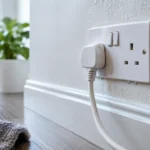
GUARDIAN damp removal devices are plug-in electronic systems intended for this purpose. They work continuously at low power and do not require disruptive wall injection, excavation or major building work. The device is selected according to the size and type of property, then positioned so its coverage reaches the affected masonry.
Think of coverage in the same straightforward way as a Wi-Fi router. Placement matters. A device hidden behind dense metal storage, positioned too far from the affected area or selected with insufficient coverage for a larger building may not give the result you need. For a family house, the HOME model is designed for domestic coverage. Larger residential and commercial premises may require PRO 15 or PRO 25 coverage, depending on the building layout.
What to expect while a damp wall dries
Drying takes time. A wall that has held moisture for years will not become dry in a week, especially if it is thick solid brick, has dense finishes or is exposed to cold weather. The smell may reduce gradually as moisture levels fall, but damaged plaster and salt-contaminated finishes can still need repair after the wall has dried.
Keep the room sensibly ventilated during the drying period. Do not press sofas, wardrobes or boxes tightly against affected walls, as this restricts airflow and hides signs of improvement or deterioration. If you need to redecorate, wait until the masonry and plaster have had time to dry properly. Rushing this stage can trap residual moisture behind new paint or wallpaper.
External checks remain necessary. Clear blocked gutters, repair leaks, keep air bricks open and make sure soil, paving or decking has not been raised against the wall. A rising-damp solution should not be used as an excuse to ignore an obvious plumbing leak or rainwater defect.
When to bring in further help
A persistent damp smell deserves prompt attention where occupants have asthma, allergies or other respiratory sensitivities. The same applies if black mould is spreading quickly, flooring feels unsafe, plaster is falling away, or you suspect a concealed leak.
For landlords and property managers, record the symptoms, location and likely cause before arranging repairs. This helps prevent repeated cosmetic work in the same room and gives tenants a clearer route for reporting changes. In commercial premises, assess the full affected area rather than treating one office or store room in isolation, as moisture can travel through connected walls.
The key is not to accept a musty room as normal for an older property. Damp has a cause, and the smell is often the first sign that the building fabric needs attention. Deal with the moisture route, give the wall time to dry, and the room can return to feeling clean rather than merely smelling covered up.