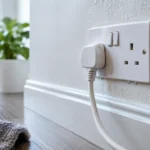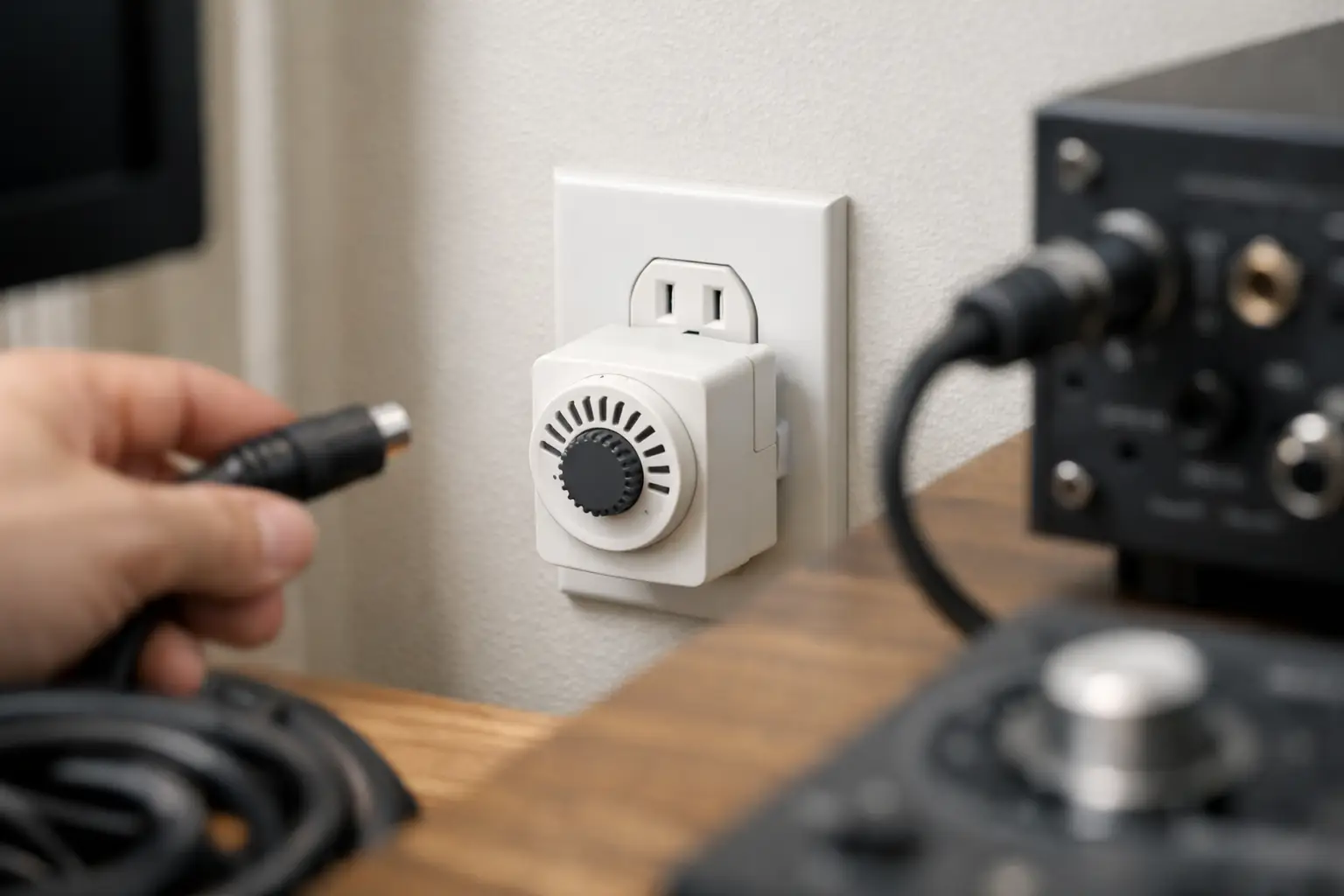
A plug-in damp device cannot protect the parts of a building it cannot effectively reach. Positioning a plug-in damp device is therefore not a finishing detail – it is part of the treatment. Put it in the right place and it can work continuously across the intended area. Put it at the far edge of the property, in an unsuitable room or on the wrong electrical circuit, and coverage may be reduced.
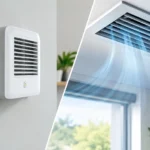
This is not like placing an air dehumidifier beside a damp patch. A dehumidifier removes moisture from the air around it and often needs moving from room to room. A plug-in rising damp device is intended to address moisture travelling upwards through masonry from the ground. Think of its coverage more like a Wi-Fi router: the device needs a sensible central position so its working range serves the building rather than being wasted beyond its outside walls.
Start by confirming you are treating rising damp
Correct placement starts with correct diagnosis. Rising damp normally affects ground-floor or basement walls, beginning near floor level and travelling upwards. You may see flaking paint, crumbling plaster, white salt deposits, a musty smell, cold wall surfaces or staining typically up to around 1.5 metres high.
That pattern matters. A patch high on a wall after heavy rain may point to a leaking gutter, roof defect or failed external render. Damp around a window can be penetrating rain. Condensation is often most visible on cold surfaces, behind furniture and around windows, particularly in poorly ventilated rooms. A plug-in device designed for rising damp should not be expected to cure a plumbing leak or water entering through a damaged roof.
Deal with obvious defects first. Repair leaking pipes, clear overflowing gutters and make sure outside ground levels are not bridging the damp-proof course. Then assess the footprint of the rising damp problem. The affected rooms may only show the visible symptoms, while the device needs to be placed to protect the wider ground-level area of the building.
Choose the central point of the area to protect
The best position is usually an available wall socket close to the centre of the building area covered by your selected model. This gives the device the most balanced reach in all directions. In a typical family house, that may be a centrally located ground-floor hallway, living room or kitchen rather than the room with the worst visible damage.
Do not automatically place the unit beside the dampest wall. If that wall is at the end of the house, much of the device’s intended coverage may extend outside the building while the rooms at the other end receive less protection. The aim is to cover the masonry footprint, not simply the most unsightly patch of plaster.
Before selecting a socket, draw a simple plan of the property. Mark the outside walls, internal partitions, basement spaces and the rooms where damp is visible. Find the approximate middle of the area to be protected, then identify the nearest suitable socket. This quick exercise prevents one of the most common installation mistakes: choosing a socket purely because it is convenient.
For a house with a central hallway
A hallway socket can be an excellent choice because it is often close to the centre of the ground floor. It also keeps the unit away from rooms where sockets may be regularly switched off, blocked by furniture or needed for other appliances.
However, central does not always mean the exact centre of one room. In a long, narrow property, use the middle of the building’s length as your guide. In an L-shaped layout, the ideal point depends on which wing has the greatest affected area. A larger or more complex property may require a model with a greater coverage radius, or more than one device.
For basements and lower-ground rooms
A basement should be assessed as part of the building structure, not as an afterthought. If the device is intended to protect a basement or lower-ground area, place it according to the coverage required for that level and the rooms connected to it. Do not assume a unit installed upstairs will necessarily provide the right coverage for a large or separated basement footprint.
Basements can also suffer from condensation, poor ventilation and water ingress. If walls are wet after rainfall or water is entering through floors or retaining walls, investigate those issues alongside rising damp. A device should be part of a clear damp-management plan, not a substitute for repairing an active water entry point.
Match the device to the building, not just the symptoms
The correct model is determined by the coverage area and layout of the property. A small home may suit a HOME model, while larger homes, multiple dwellings and commercial premises may need PRO 15 or PRO 25 coverage. Measure the area you need to protect and allow for the full footprint, not only the rooms where damage is visible.
Walls, room divisions and unusual layouts can affect practical placement decisions. A very long building, a property with a large extension, or premises split into distinct sections may not be well served by one unit positioned at an extreme end. In these cases, plan coverage first and choose the model or device arrangement that gives each section proper attention.
For landlords and facilities managers, it is worth keeping a simple record of where each device is installed, which rooms it is intended to cover and when it was switched on. This is particularly useful across blocks, offices, shops and converted properties where a central point may not be obvious.
Use a safe, permanent electrical position
Once you have found the right coverage point, use a proper mains socket that can remain powered continuously. The device is designed for ongoing operation. Switching it off at night, unplugging it for a vacuum cleaner or using a socket controlled by a wall switch interrupts that protection.
Keep the unit indoors, dry and accessible. Do not install it where it could be splashed, covered by heavy furniture or exposed to damage. Avoid relying on an extension lead as a permanent solution. If the ideal location has no suitable socket, speak to a qualified electrician about installing one safely rather than compromising the position.
Do not overload the outlet with high-demand appliances. Follow the supplied installation instructions and check that the socket and electrical installation are in good condition. If you have any concern about wiring, moisture around sockets or electrical safety, stop and obtain professional advice.
Give the walls time to dry
A rising damp solution is not an instant cosmetic fix. Once the moisture movement from the ground is addressed, existing moisture held in the masonry and plaster needs time to dry naturally. Thick walls, dense materials, poor ventilation, cold weather and the previous severity of damp all affect the drying period.
During this time, salt contamination may continue to show on wall surfaces. Old plaster that has been damaged by salts can remain friable even after the wall begins drying. Do not rush to repaint or replaster immediately. Allow the wall to dry, monitor its condition and then repair finishes when the underlying masonry has had sufficient time to stabilise.
Gentle ventilation and normal heating can support a comfortable indoor environment. An air dehumidifier may also help manage airborne humidity while drying takes place, but it does not replace treatment aimed at rising damp at its source. It removes water from room air, not the electrical-potential difference associated with moisture travelling up from the soil.
Check placement before you leave it to work
After installation, take one final look at the device location. Is it near the centre of the intended coverage area? Is it serving the ground-level footprint rather than one isolated room? Can it stay plugged in continuously and safely? Is the selected model suitable for the property size?
If the answer to any of these questions is no, correct the position now. Moving a plug-in device at the start is far easier than waiting months and wondering why a distant part of the building has not improved as expected.
GUARDIAN damp removal devices are designed to make rising damp treatment practical without disruptive building work, but the principle remains simple: give the device the right area to protect and the uninterrupted power to do its job. A well-chosen central socket is a small decision that can make a lasting difference to your walls.