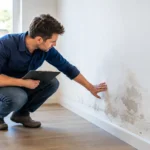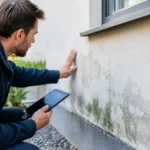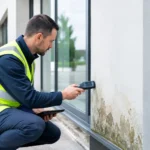
A damp wall is not always a ventilation problem. If moisture, salts, flaking paint or crumbling plaster are appearing from floor level to around 1.5 metres high, the issue may be rising damp. Non-invasive damp control is designed for this specific problem: reducing the conditions that allow ground moisture to travel up through masonry, without drilling rows of holes into your walls.
For homeowners, landlords and property managers, that matters. Traditional damp treatment can mean dust, injected chemicals, replastering and rooms out of use. A correctly selected electronic system offers a practical alternative: plug it in, position it correctly and allow the building fabric time to dry.
First, identify whether it is rising damp
Rising damp starts below ground. Masonry contains tiny pores, rather like a sponge. Where there is an electrical-potential difference between wet ground and the wall, moisture can be drawn upwards through those pores. As the water evaporates from the wall surface, it leaves behind salts. These salts can damage paint, plaster and decorations even after the wall begins to dry.
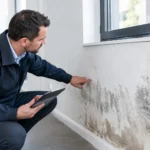
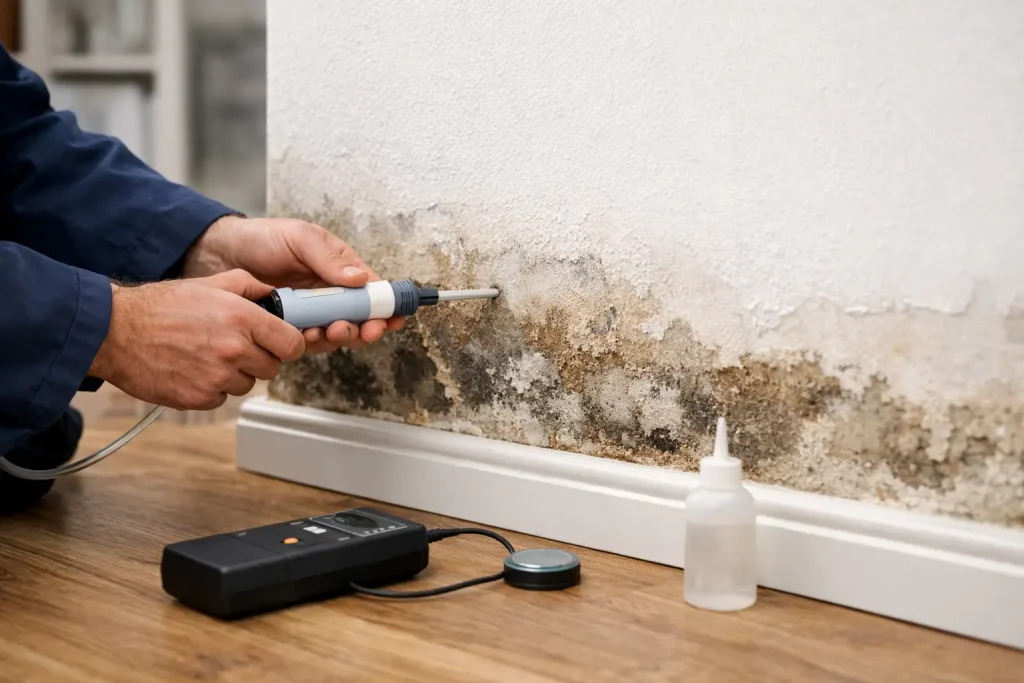
The usual signs are damp damage concentrated at the base of an external or internal ground-floor wall, a cold wall surface, peeling finishes, white salt deposits and a persistent musty smell. Damage may rise gradually, often with an uneven tide mark.
However, do not assume every damp patch is rising damp. A leaking gutter, failed pointing, cracked render, high external ground levels, a bridged damp-proof course or condensation can create similar symptoms. Condensation is more likely on windows, in corners, behind furniture and in bathrooms or kitchens. It is mainly caused by moisture in the air meeting cold surfaces. Rising damp comes from the ground through the wall.
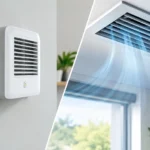
This distinction matters because an air dehumidifier and a rising damp treatment do different jobs. A dehumidifier removes water from room air. It can make a room feel more comfortable and may help reduce surface condensation, but it does not stop moisture entering masonry from the ground. If the source is rising damp, drying the air alone is symptom management.
How non-invasive damp control works
Electronic non-invasive damp control works continuously from a standard mains supply. The device is installed inside the property and produces a low-energy signal intended to neutralise the electrical-potential difference that encourages moisture to move upward through the wall.
A simple comparison is static electricity. A hairbrush can attract small pieces of paper because of an electrical charge. In the same way, electrical forces can influence how moisture behaves in porous building materials. When the upward driving force is removed, existing moisture can return downwards through gravity and the wall can begin its natural drying process.
There is no need to inject chemicals into brickwork or cut into plaster to install the device. This is why the method is particularly useful in lived-in homes, rented properties, older buildings and commercial premises where disruption is costly.
GUARDIAN devices are designed to operate continuously with very low power use. Once fitted, there are no tanks to empty, no filters to wash and no daily settings to manage. The key is not frequent maintenance. It is correct diagnosis, model choice and placement.
Where to place a damp-control device
Think of the device coverage like a Wi-Fi router. Its signal spreads across a defined area, but its position affects how effectively it reaches the building fabric. A device should be located as centrally as practical within the affected area, on an internal wall and above floor level.
Avoid placing it inside a metal cabinet, behind large metal appliances or in a position where substantial structural metal may interfere with coverage. Do not hide it in a damp cellar simply because the damage is most visible there. The best position is normally one that gives the clearest, most central coverage of the ground-floor walls being protected.
For a typical family house, the HOME model is intended for domestic coverage. Larger homes, converted buildings and commercial premises may need PRO 15 or PRO 25 models, selected according to the building footprint and the radius required. A long property, a building with separate wings, or premises divided by thick walls may require more than one device. Bigger is not automatically better if the building layout needs separate coverage zones.
Before installation, measure the property rather than guessing. Include the ground-floor and elevated ground-floor areas where rising damp is present or likely to develop. In commercial premises, consider storerooms, corridors and extensions as well as customer-facing rooms. A device cannot protect masonry beyond its specified coverage radius simply because it is plugged in nearby.
Installation is simple, but positioning is not optional
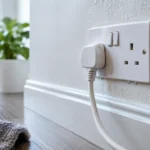
The physical installation is straightforward. Mount the device securely on the chosen internal wall, following the supplied fixing guidance, then connect it to a suitable mains socket. The unit should remain powered continuously. Switching it off overnight, at weekends or when a property is vacant interrupts the protection and delays the drying process.
Use a safe electrical supply and do not run a cable where it can be damaged, trapped in a door or become a trip hazard. If a socket is unsuitable, have a qualified electrician provide an appropriate one. The device itself is low energy, but basic electrical safety still applies.
Do not move the unit repeatedly to chase visible patches of damp. Once the best central location has been chosen, leave it in place. The system works across the building fabric over time, not as a spot treatment for one stain.
Drying takes time because walls hold water
A rising damp solution cannot make wet masonry dry overnight. Brick, stone, mortar and plaster can hold a surprising amount of moisture, particularly where the problem has been present for years. The wall must first stop receiving moisture from below, then release what is already stored within it.
Drying expectations depend on wall thickness, construction, outside weather, heating, ventilation and the level of previous saturation. You may notice that a musty smell reduces before the wall appearance improves. Salt contamination can also remain visible after the moisture source is controlled, because the salts were carried into the plaster during the period of dampness.
Do not rush to redecorate. Early paint failure often happens when a wall is covered before it has dried sufficiently, trapping moisture and salts beneath a new finish. Allow time, monitor the wall and deal with damaged salt-contaminated plaster only when the underlying damp condition is improving. A breathable finish may be more appropriate than an impermeable coating, depending on the wall construction.
Good ventilation and sensible heating can support drying, but they are not substitutes for tackling rising damp at its source. Open trickle vents where appropriate, avoid packing furniture tightly against affected walls and give air a chance to circulate. These are supporting measures, not the main treatment.
When another repair is needed first
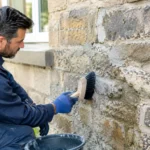
Non-invasive damp control addresses moisture rising from the ground. It cannot repair a leaking roof, blocked downpipe, broken water pipe or cracked external render. Those faults must be fixed separately. Likewise, external ground should not sit above or bridge a damp-proof course, because it can provide a direct route for moisture into the wall.
If damp damage is high on a wall, concentrated below a roofline or worse after rain, inspect the outside of the building before deciding it is rising damp. If mould is mainly in corners, wardrobes and rooms with poor extraction, improve ventilation and investigate condensation. A correct diagnosis prevents money being spent on the wrong remedy.
For property managers, this is especially important. One building can have more than one moisture issue at the same time. A ground-floor wall may have rising damp, while a top-floor bathroom has condensation and a rear elevation has rain penetration. Treat each cause directly rather than expecting one product to solve every form of damp.
A practical route to dry, usable walls
The value of non-invasive damp control is not just avoiding building work. It is continuous protection with minimal disruption. There are no chemical injections, no need to strip out sound finishes simply to install the system, and no daily dehumidifier routine.
Start with the evidence on the wall, rule out leaks and condensation, then choose coverage that matches the building. Fit the device in the right place and leave it operating while the masonry dries at its own pace. Dry walls are not created by hiding the symptom. They begin with stopping moisture at the source.