A useful damp controller review should not start with a plug socket. It should start with the wall. If moisture is rising from the ground into masonry, an air dehumidifier may make the room feel drier while the wall itself remains wet. That is the costly mistake many homeowners make.
A damp controller is designed for a different job. Rather than collecting moisture from the air, it is intended to address the electrical conditions associated with moisture travelling up through a wall. When the issue really is rising damp, this can offer a practical, low-running-cost alternative to repeated decorating, chemical injections or disruptive building work.
What a damp controller is designed to do
Rising damp is not simply a humid room. It is moisture drawn from soil into porous brick, stone or mortar, usually affecting ground-floor walls and showing up from floor level to around 1.5 metres high. As the moisture evaporates, it can leave salts behind. That is why paint bubbles, plaster crumbles and a white, powdery residue can keep returning after a cosmetic repair.
An electronic damp controller works continuously once plugged in. The principle is based on reducing the electrical-potential difference that encourages moisture to move through the masonry. Think of it like static electricity: when there is a difference in charge, there is a tendency for movement. The device is intended to counter that effect, allowing existing moisture to return downwards through gravity rather than continuing to rise.
This is not the same as heating a room or removing water vapour from the air. A dehumidifier can be useful for condensation, drying laundry or controlling humidity in a poorly ventilated space. It does not, however, stop groundwater being drawn into a wall. If the source is below floor level, treating only the air is treating the symptom.
Damp controller review: diagnose the wall before you buy
The strongest review is honest about limits. No damp controller is a cure for every damp problem, because not every damp problem is rising damp. A leaking gutter, cracked render, faulty flashing, bridged damp-proof course, plumbing leak or condensation issue needs its own repair.
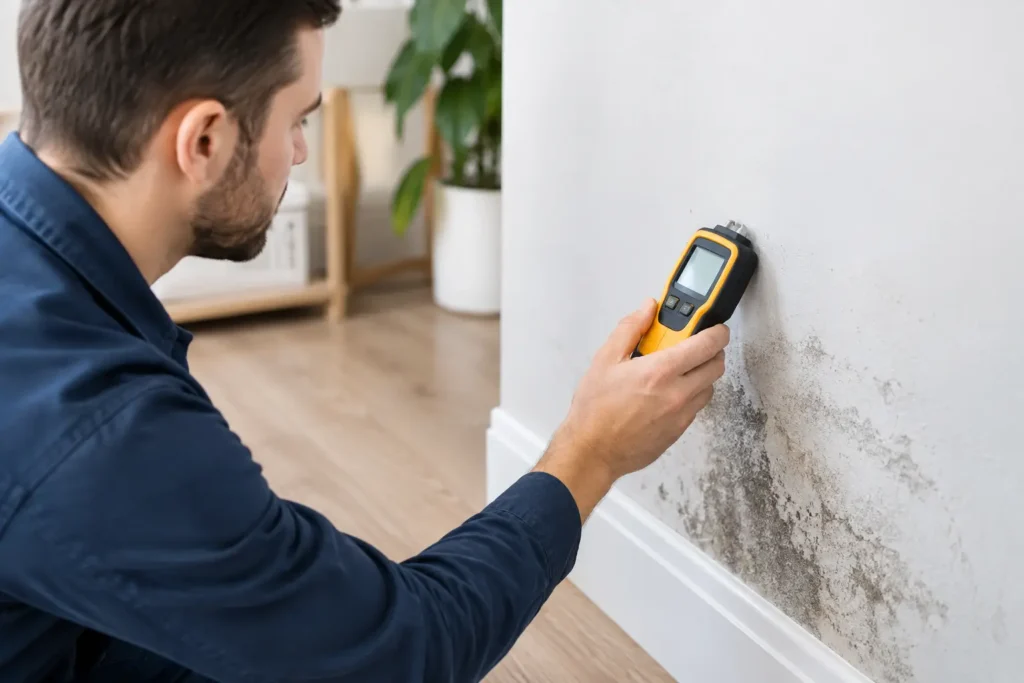
Look closely at the pattern. Rising damp often appears on lower wall sections, particularly external or ground-floor walls, with damaged skirting boards, cold masonry, staining, flaking paint and salts. The affected area may become worse after wet weather, but it does not normally begin high on a wall or around a single pipe.
There are four warning signs that should make you investigate another cause first:
- Damp patches concentrated around windows, chimneys, rooflines or gutters
- A localised wet area beside plumbing, radiators or appliances
- Black mould mainly in corners, behind furniture or around cold window reveals
- Water entering after rainfall through a visible crack, damaged roof or failed seal
A controller will not mend a roof or repair a leaking pipe. Deal with active water ingress first. Likewise, improve ventilation if daily condensation is feeding mould growth. Clear diagnosis protects your budget and gives any damp solution a fair chance to work.
What makes a controller worth considering
For the right building and the right diagnosis, the appeal is straightforward: the device runs continuously, uses very little electricity and does not require walls to be drilled, injected or stripped out before it can begin operating. This matters in occupied homes, rental properties and commercial spaces where disruptive remedial work is difficult to schedule.
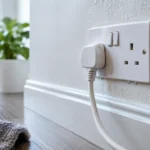
Installation should also be simple. A plug-in controller needs a suitable mains socket and a sensible position within its stated coverage area. Placement is not an afterthought. The device should be located as centrally as practical to the affected area, rather than tucked behind metal appliances, enclosed in a cupboard or positioned at the far edge of a large building.
Coverage works much like a Wi-Fi router. The advertised radius matters, but so does the layout of the property. Thick internal walls, separate wings, extensions, changes in floor level and large commercial areas can all affect how many devices are appropriate. Choosing on price alone can leave part of the building outside the effective coverage area.
For a typical family house, a home model may be sufficient when positioned centrally. Larger properties, blocks, commercial premises and buildings with wider footprints need a model designed for greater coverage, such as the PRO 15 or PRO 25 range. Measure the property, consider the most affected walls and select for the building rather than guessing.
Drying takes time, and that is normal
One of the most misleading expectations in damp treatment is the idea that a wall should look dry within a week. Masonry holds a significant amount of water. Once the upward movement is controlled, that stored moisture must gradually leave the wall and return downwards.
Drying time depends on wall thickness, construction, salt contamination, ventilation, heating habits and how long the problem has been present. A solid brick wall that has been damp for years will not recover at the same rate as a newer cavity wall with a recent issue. It is sensible to expect progress over months, not days.
During this period, avoid rushing to replaster or repaint a wall that is still damp. Decorative finishes can trap moisture or fail again, making it appear that the treatment has not worked. Allow the wall to dry, monitor the affected area and deal with loose or salt-damaged finishes at the appropriate stage.
A controller is also not a reason to ignore basic property maintenance. Keep external ground levels below the damp-proof course where possible, clear gutters, maintain ventilation and repair defects promptly. A dry building is achieved by controlling moisture paths, not by relying on one action alone.
Running cost, safety and everyday use
A good damp controller should be designed to remain plugged in continuously. Switching it off regularly defeats the purpose of continuous protection. Unlike a dehumidifier, it should not need a water tank emptied, filters cleaned every few days or windows kept shut while it runs.
Check that the unit is built for UK mains use and installed according to its instructions. Use an appropriate socket, keep the unit dry and accessible, and do not cover it. If an extension lead is unavoidable, it should be suitable for the appliance and positioned safely. In shared or commercial settings, make sure staff know not to unplug it during cleaning or rearranging furniture.
The running cost is generally low because these devices use only a small amount of power. That is particularly relevant for landlords and facilities managers managing several units. A low-energy device can operate day and night without the electricity demand, noise and ongoing maintenance associated with air dehumidifiers.
GUARDIAN damp removal is aimed at this practical use case: identifying suspected rising damp, choosing coverage that suits the building and leaving a correctly positioned device operating continuously.
The verdict: useful when the cause is right
A damp controller is not a magic box for every wet wall. It is a focused solution for a focused problem. If the evidence points to rising damp, a correctly sized and positioned electronic controller can be a sensible option for reducing the conditions that keep feeding moisture into masonry.
Before buying, inspect the pattern of damage, rule out leaks and rain penetration, and choose coverage for the actual footprint of the property. Then give the wall time. Damp that has travelled upwards for years will not disappear overnight, but a properly diagnosed problem deserves a solution that addresses more than the air around it.