A damp-removal device should be the easy part of protecting your property, not another source of concern. Good damp device safety starts with two simple rules: use a sound mains socket and install the device where it can work continuously without being disturbed.
Electronic rising-damp devices are designed for low-energy, continuous operation. They do not collect water, produce heat like a dehumidifier, or need daily emptying. But they are still electrical equipment. Correct placement, a dry connection point and sensible checks give you safe, dependable protection while your walls dry.
Start by confirming the damp problem
A device intended to address rising damp should be used for rising damp. The typical signs are moisture damage, salt deposits, crumbling plaster, peeling finishes, cold lower walls and musty odours – usually starting at ground level and rising up to around 1.5 metres.
Condensation behaves differently. It often appears on windows, in bathrooms, behind furniture and on cold surfaces, particularly during winter. A leaking pipe, defective gutter or damaged roof can also wet a wall from another direction. No electronic damp device should be expected to repair a plumbing leak or stop rain penetrating damaged masonry.
This matters for safety as well as results. If a socket, cable or wall-mounted appliance has been exposed to a known leak, do not simply plug in and carry on. Isolate the affected circuit if necessary and ask a qualified electrician to assess the installation. Fix the water entry route first.
Damp device safety begins at the socket
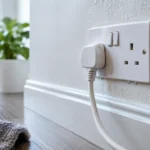
Use a fixed, properly maintained mains socket that is compatible with the device supplied for your property. The plug should fit securely, the faceplate should not be cracked or loose, and there must be no signs of scorching, buzzing, overheating or intermittent power.
Avoid relying on an extension lead, multi-way adaptor or trailing cable as a permanent arrangement. These create avoidable trip hazards and are more likely to be knocked, pinched by furniture or used beyond their intended load. A low-power unit does not need a complicated electrical setup, but it does need a stable one.
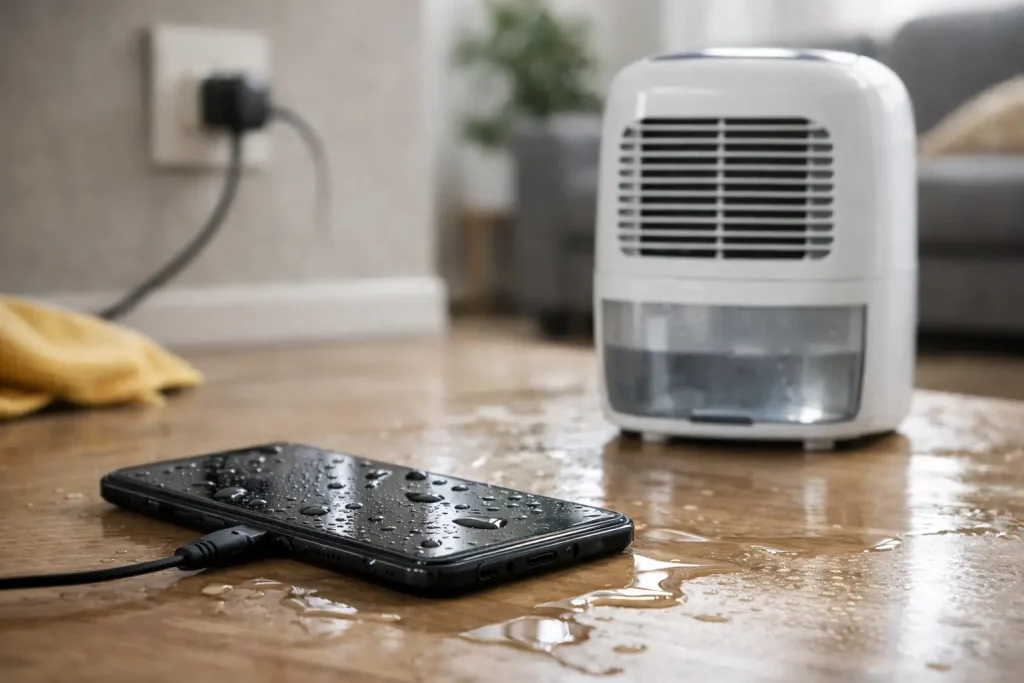
The socket must be dry and outside areas where it could be splashed. Do not install a mains-powered device immediately beside a sink, bath, shower, leaking radiator or visibly wet patch. In a basement, utility area or commercial plant space, consider the realistic risks: floor washing, flooding, stored items and accidental impact all affect the best mounting position.
If you are unsure about the condition of the wiring, have an electrician check it. This is particularly sensible in older homes, rented properties and commercial buildings where socket use is shared by several people.
Position the device for safe, effective coverage
Placement affects both performance and practical safety. The device needs to be positioned in accordance with its supplied instructions and selected for the size and layout of the building. Think of its operating area like Wi-Fi coverage: thick walls, building shape and distance matter, so the unit should be as central to the area it is intended to protect as practical.
Choose a solid, accessible wall location where the unit and its cable will not be hidden behind heavy furniture, struck by doors or used as a shelf. Keep enough clear space to inspect the plug and lead. Do not cover the device with coats, boxes, curtains or insulation materials.
For a family house, the appropriate HOME model may provide the required coverage. Larger buildings, multiple ground-floor areas and commercial premises may need PRO 15 or PRO 25 coverage, and sometimes more than one device. Do not select a larger model purely by guesswork. Measure the property, consider its construction and follow the coverage guidance before installation.
A higher location can protect the device from knocks and curious children, but it must remain serviceable. You should be able to check the indicator and disconnect it safely if needed. Never mount it where reaching the plug requires standing on unstable furniture.
Keep cables protected
Route the cable so it cannot be trapped under doors, crushed by cupboards or stretched tightly across a walkway. If the lead is damaged, frayed, kinked or warm during normal use, unplug the unit and do not use it until the issue has been resolved.
Do not cut, join, alter or repair the original power lead yourself. Electrical modifications can compromise safety and may invalidate the product warranty. Replacement and repair work should be carried out only in line with the manufacturer’s instructions by a suitably qualified person.
Safe use in occupied homes and rented properties
For homeowners, the main task is making sure the device remains plugged in and undisturbed. Rising damp does not disappear overnight. As the wall moisture returns to the ground through gravity, drying takes time and depends on wall thickness, material, previous saturation and ventilation. Switching the device off repeatedly interrupts continuous protection.
That does not mean ignoring basic property care. Maintain normal ventilation, especially in kitchens and bathrooms, and deal with condensation separately where it exists. A dehumidifier can reduce airborne humidity in a particular room, but it does not address moisture rising from soil into masonry. Use the right tool for the moisture source.
Landlords and property managers should make the installation clear to occupants. Tell tenants not to unplug the device for convenience, cover it, paint over it or move it without permission. Include the unit in periodic property inspections alongside checks for leaks, guttering, ventilation and changing wall condition.
In shared commercial premises, make one person responsible for visual checks. A device installed in a corridor, storeroom or reception area should not be unplugged to power cleaning equipment, chargers or temporary displays. Label the socket where appropriate so continuous operation is understood.
What to do if something does not look right
A quick visual check every few months is usually enough. Look for damage to the casing, lead and plug, and make sure the unit remains secure on the wall. Check that the socket is dry and that no new leak has developed nearby.
Stop using the device and seek advice if you notice a burning smell, unusual noise, visible damage, discolouration around the plug, repeated tripping of the circuit, water contact or an indicator that suggests a fault. Do not keep resetting a tripped breaker without finding out why it tripped.
If your property has flooded or suffered a significant plumbing leak, disconnect electrical equipment only if it is safe to do so. Do not touch plugs, switches or appliances while standing in water or if there is any doubt about electrical safety. Contact a qualified electrician before reconnecting equipment in the affected area.
A simple installation check before you leave it running
Before treating the device as part of the building, confirm that the model suits the coverage area, the mounting point follows the product instructions and the socket is sound and dry. Ensure the cable is protected, the device is not covered, and everyone responsible for the property knows it should remain powered.
That is the advantage of a properly installed GUARDIAN device: it can work quietly in the background without water tanks, daily settings or disruptive damp-proofing work. Safety is not complicated, but it is deliberate.
Walls may take months to show their full improvement, especially where plaster has held moisture for years. Keep the device running, watch for signs of a separate leak or condensation issue, and give the building the steady conditions it needs to dry naturally.