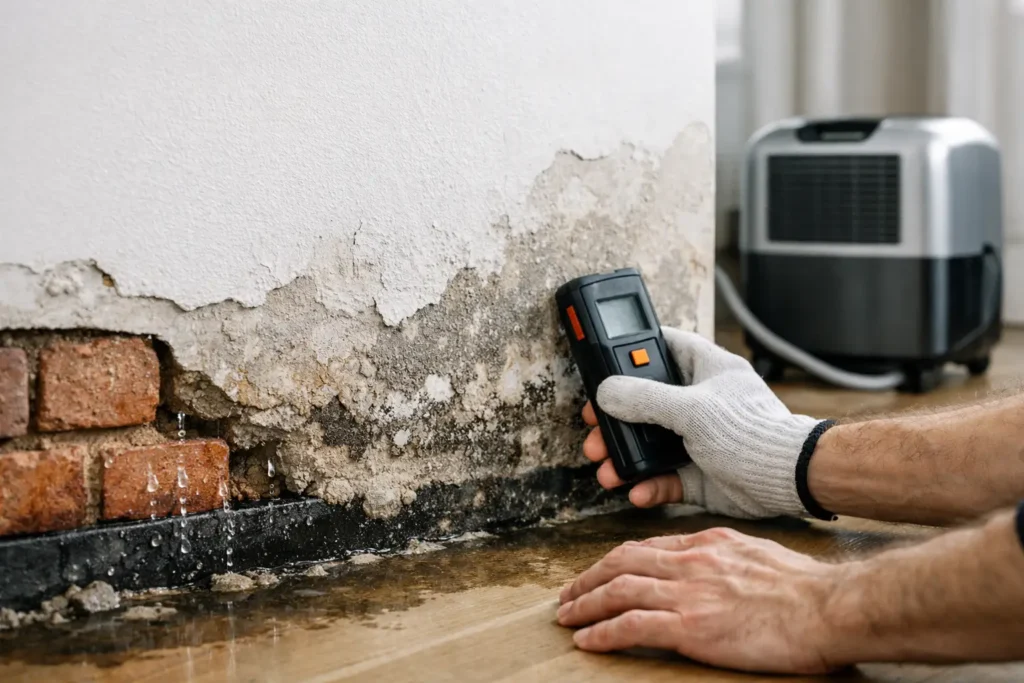
A wall that feels cold, smells musty and shows peeling paint is not asking for another coat of paint. Effective damp prevention starts by finding where the moisture is coming from. If it is rising from the ground through masonry, drying the air may make the room feel better temporarily, but it does not stop the wall taking in more moisture.
Rising damp is a persistent building problem. It can damage plaster, lift wallpaper, leave white salt marks and create the conditions in which mould and fungal odours thrive. The good news is that a clear diagnosis and the right continuous treatment can protect the property without turning a room into a building site.
Damp prevention begins with the right diagnosis
Not every damp patch is rising damp. Condensation forms when warm, moisture-laden air meets a cold surface. A leaking gutter, broken roof tile or faulty pipe can introduce water from above or behind a wall. Penetrating damp is often worse after heavy rain and may appear at any height.
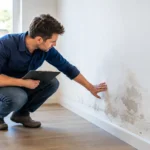
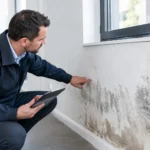
Rising damp follows a different pattern. Moisture travels upwards from soil into the wall, usually affecting ground-floor rooms, basements and elevated ground-floor spaces. The visible damage commonly starts near floor level and can rise to around 1.5 metres. You may see tide marks, flaking paint, crumbling plaster, damp skirting boards or powdery white salts left behind as the moisture evaporates.
Check the outside of the property too. Soil, paving or flower beds bridging the damp-proof course can create a route for moisture. Damaged drainage and leaking pipework must be repaired first. A rising-damp solution should never be used to ignore an obvious leak or poor external ground level.
Why a dehumidifier is not rising damp prevention
An air dehumidifier removes water vapour from the room. This can be useful for condensation, drying laundry or improving comfort in a poorly ventilated space. It does not, however, stop moisture travelling through a wall from the ground.
Think of it like mopping a floor while a tap is still running. The surface may look drier for a while, but the source remains active. A dehumidifier may also need regular emptying, runs continuously at a higher energy cost and only treats the air within its immediate area.
For true rising damp prevention, the focus needs to be on the moisture movement in the masonry. Once that movement is addressed, the wall needs time to release its stored moisture naturally. This is why a genuine solution requires patience as well as the right equipment.
How electronic damp prevention works
Masonry and soil can carry a small electrical-potential difference that encourages ground moisture to travel upwards through the wall. Electronic damp-control systems are designed to counter this process, allowing existing moisture to return downwards through gravity rather than continuing to rise.
The principle is easier to understand if you have ever felt static electricity after using a hairbrush. You cannot see the charge, but it has an effect. In the same way, an electronic damp-control device works continuously in the background to influence moisture movement within the building fabric.
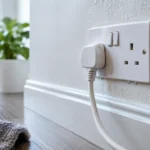
GUARDIAN damp removal devices are plug-in units designed specifically for this purpose. They do not collect water from the air and they do not require walls to be drilled, injected or stripped back as part of installation. Once positioned correctly and left powered, the device provides ongoing protection across its intended coverage area.
This approach is particularly useful where invasive work would be disruptive, such as occupied homes, rented properties, heritage buildings, offices and commercial premises. It is also a practical option for owners who want to avoid repeated cosmetic repairs that fail because the underlying wall remains damp.
Choose coverage for the building, not just the room
Electronic damp prevention depends on correct coverage. A device should be selected for the size and layout of the building, not simply placed in the room where damage is most visible. Moisture may be showing in one wall while the affected masonry extends through adjoining rooms.
For a typical family house, a home-sized model may provide suitable coverage when positioned centrally. Larger homes, converted properties and commercial buildings usually need a higher-capacity unit or more than one device. The same principle applies as Wi-Fi coverage: the router belongs in a sensible central location, not hidden at the furthest edge of the area you want it to reach.
Thick internal walls, large extensions, separate wings and changes in floor level can affect coverage. In a larger property, it is often better to use additional units than to expect one device to cover beyond its designed radius. This is especially relevant for landlords and facilities managers responsible for multiple ground-floor rooms or a long commercial layout.
Positioning matters
Place the unit indoors, in a dry location, at a practical central point for the affected building area. It should be connected to a suitable mains socket and left operating continuously. Do not place it outdoors, in a wet area or behind large metal obstructions.
Avoid switching it off overnight, when leaving the property empty or because the wall looks better after a few weeks. Damp control is not a short burst of treatment. Continuous operation maintains the conditions needed to prevent further rising moisture.
If the property has separate sections or a particularly wide footprint, consider each section individually. A detached garage, self-contained annexe or distant commercial room may need its own coverage rather than relying on a device in the main building.
What to expect while walls dry
A wall affected by rising damp does not dry overnight. Masonry, plaster and timber can hold a surprising amount of moisture. Once upward movement has been stopped, the drying process happens gradually and depends on wall thickness, construction, ventilation, temperature and how long the problem has been present.
Do not rush to replaster or redecorate. Fresh paint applied to a damp wall can blister, peel or trap moisture behind the finish. Let the wall dry properly before making cosmetic repairs. In some cases, damaged plaster may still need to be removed and renewed once the moisture source is under control.
You may notice salt deposits as the wall dries. These are residues carried by the moisture, not proof that the treatment has failed. Brush loose deposits away carefully and continue to monitor the wall over time. A damp meter can help show progress, but readings should be interpreted sensibly because salts can affect some meter results.
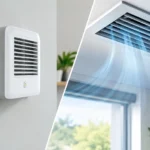
Good ventilation still helps. Open trickle vents where available, use extractor fans in kitchens and bathrooms, and avoid drying large amounts of washing indoors without ventilation. These steps manage indoor humidity, while rising-damp treatment addresses moisture entering through the masonry. They are different problems, and a well-managed property deals with both.
Protect the property before damage spreads
Damp prevention is cheaper and easier than repeated repair. Waiting until plaster falls away, timber softens or mould becomes established can turn a manageable issue into a larger maintenance job. For landlords, it can also mean complaints, void periods and avoidable damage between tenancies.
Act when the signs are still localised. Check low-level walls, corners behind furniture, basements and rooms with a persistent musty smell. Keep external ground levels below the damp-proof course where possible, maintain gutters and drainage, and deal with leaks promptly.
Most importantly, do not confuse a dry-looking surface with a dry wall. A solution that treats the source gives the building the chance to recover properly, protects the finish for longer and makes the property healthier to live or work in. Start with the cause, keep the protection running, and give the masonry time to dry.