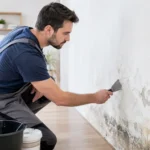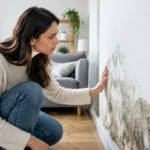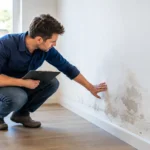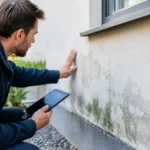
A damp patch that keeps returning after repainting is not a decorating problem. It is a moisture problem, and covering it up will not stop it. Damp proofing without injections gives property owners a way to address rising damp without drilling rows of holes into walls or pumping chemical creams into the masonry.
For the right type of damp, a non-invasive approach can protect the building while avoiding dust, disruption and damaged finishes. The first job is to identify what is actually making the wall wet.
Rising damp is not the same as condensation
Rising damp starts in the ground. Moisture travels up through porous brick, stone or mortar and can leave walls cold, stained and damaged. It is usually most visible on ground-floor walls, basement areas and rooms built at, or close to, external ground level.
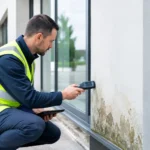
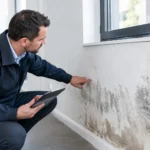
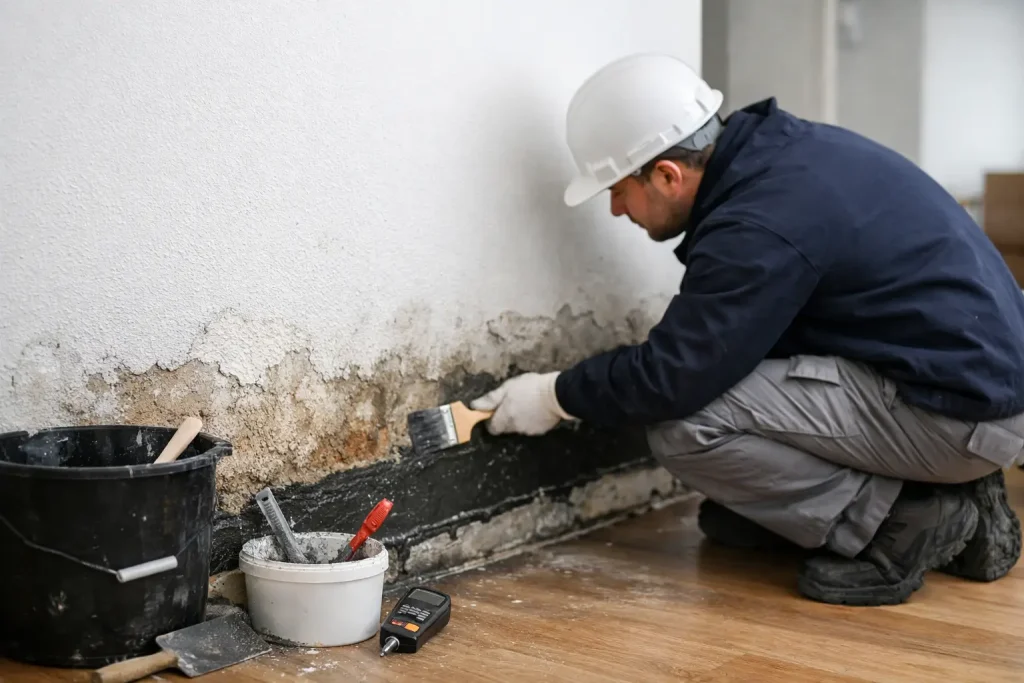
The clues are often clear. You may see a tide mark, flaking paint, crumbling plaster, white salts on the wall, musty smells or dark patches that rise from floor level. Damage is commonly concentrated in the lower section of the wall, sometimes reaching around 1.5 metres above ground level.
Condensation behaves differently. It forms when warm, humid air hits a cold surface, often around windows, corners, bathrooms and poorly ventilated rooms. A leaking gutter, damaged roof, failed render or plumbing leak can also create damp patches. None of these problems will be cured by a rising-damp treatment alone.
This distinction matters. A dehumidifier can reduce moisture in the air and may help manage condensation, but it does not stop ground moisture travelling into a wall. If the source is rising damp, drying the air is like mopping a floor while the tap is still running.
Why injection damp courses are not always the answer
Chemical injection is the traditional response to suspected rising damp. It involves drilling a series of holes along a mortar course and injecting a water-repellent cream or fluid to create a new damp-proof barrier.
It can be disruptive. Skirting boards may need removal, plaster can require hacking off, and the work leaves permanent drill holes in the masonry. Older properties with thick walls, irregular stone, rubble-filled cavities or damaged mortar may also make consistent treatment more difficult.
There is another practical issue: a chemical barrier does not instantly dry a saturated wall. The wall still needs time to release moisture, and contaminated plaster may have to be replaced. That can mean a long programme of building work before the room is ready for redecorating.
Damp proofing without injections is attractive because it avoids this physical intervention. It is particularly useful where owners want to preserve original walls, minimise disturbance in occupied homes, or manage damp across several properties without repeated invasive work.
How electronic damp proofing works
Electronic damp-control devices are designed to address the electrical potential associated with moisture movement from the soil into masonry. Put simply, they work with the electrical forces that can encourage water to travel upwards through a wall.
A useful comparison is static electricity from a hairbrush. You cannot see the charge, but you can see its effect when hair lifts towards it. In a building, tiny electrical differences can influence how moisture moves through the wall. An electronic device is intended to neutralise that difference, allowing existing moisture to return downwards through gravity instead of continuing to rise.
Once the upward movement is stopped, the wall can begin its natural drying process. This is not an overnight fix. Masonry, plaster and salts hold moisture, so drying time depends on wall thickness, the level of saturation, ventilation, heating and the condition of the finishes.
GUARDIAN damp removal devices are designed to operate continuously using low electrical power. They are plug-in units, not building work, and are intended to provide ongoing protection rather than a short-term response to a visible patch.
What to check before choosing a non-invasive solution
A correct diagnosis protects both your property and your budget. Start outside, because rainwater faults can look remarkably similar to rising damp inside. Check that gutters are not overflowing, downpipes discharge correctly, external ground levels are not bridging the original damp-proof course, and drains are not leaking beside the wall.
Inside, look at the pattern. Rising damp normally begins at the base of a wall and rises gradually. A localised wet patch high up a wall is more likely to be a leak or penetrating damp. Heavy mould around windows and behind furniture may point to condensation and poor air movement.
Also consider the building itself. Solid-wall Victorian homes, older cottages, basements and ground-floor commercial units can all have different moisture risks. Do not assume every damp wall needs the same treatment.
Where there is significant structural damage, active water ingress, a plumbing leak or extensive mould affecting health, resolve those issues first. Electronic damp proofing is for rising damp, not a substitute for repairing a roof or clearing a blocked gutter.
Choosing coverage for your property
Device choice is based on the area that needs protection and the type of building. Think of coverage in the same way as a Wi-Fi router: the unit needs to be positioned so its effective range reaches the damp-affected masonry, not hidden in a remote room with little connection to the problem area.
For a typical family house, a HOME model is designed for domestic coverage. Larger homes, blocks, commercial units and more complex buildings may need a PRO 15 or PRO 25 model, depending on their size and layout. Large premises may also require more than one device to provide suitable coverage across separated sections of the building.
Do not choose only by the number of rooms. Wall construction, floor levels, extensions and the position of the affected walls all matter. A long property with thick internal divisions may need a different placement plan from an open-plan building of the same floor area.
Placement and installation matter
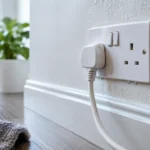
Non-invasive does not mean careless. Position the device centrally in relation to the rising-damp area wherever practical, at a suitable height and close to a permanent mains socket. Keep it accessible, dry and protected from accidental knocks.
The unit must remain powered for continuous operation. Avoid switching it off at night, unplugging it to use the socket for another appliance or placing it where a cleaner, tenant or visitor may disconnect it without realising its purpose. Its low energy use is part of the benefit, but only when it is left working.
Use a safe electrical supply and follow the supplied installation instructions. If a socket, cable or electrical circuit is damaged, have it checked by a qualified electrician. The device is simple to install, but electrical safety is never optional.
What happens after installation
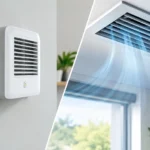
The wall needs time to dry. During this period, improve normal ventilation, maintain sensible background heating and avoid sealing damp surfaces under new paint, wallpaper or impermeable coatings. Trapped moisture can slow the drying process and leave salts visible on the surface.
Existing decorative damage may still need attention once the masonry has dried. Blown plaster, salt-contaminated finishes and rotten skirting boards cannot repair themselves simply because the moisture source has been addressed. However, stopping further rising damp gives repairs a proper chance to last.
Keep watching the wall pattern rather than judging progress day by day. A damp meter reading, the condition of plaster and a reduction in spreading marks can all help show whether drying is progressing. Patience is part of a successful damp-management plan.
A cleaner route to long-term wall protection
Drilling and chemical injection are not the only choices for a property with rising damp. When diagnosis confirms moisture is rising from the ground, damp proofing without injections offers a practical route that avoids unnecessary damage to walls and disruption to daily life.
Start with the cause, choose coverage that suits the building, install the device correctly and allow the wall time to dry. That is how a damp wall becomes a repairable wall rather than a problem you keep painting over.