A damp patch low on a wall is not automatically rising damp. Treat the wrong cause and you can spend money drying air, repainting walls and replacing plaster, only to watch the damage return. Knowing how to test rising damp starts with looking at the pattern of moisture, not just the presence of it.
Rising damp affects masonry from the ground upwards. Moisture travels through pores in brick, stone and mortar, carrying salts with it. The result is usually a recognisable band of damage on ground-floor walls, often reaching up to around 1.5 metres. A quick, methodical check can tell you whether this is likely to be rising damp, condensation, a plumbing leak or water entering from outside.
How to test rising damp: start with the wall pattern
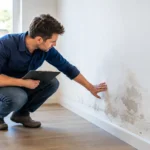
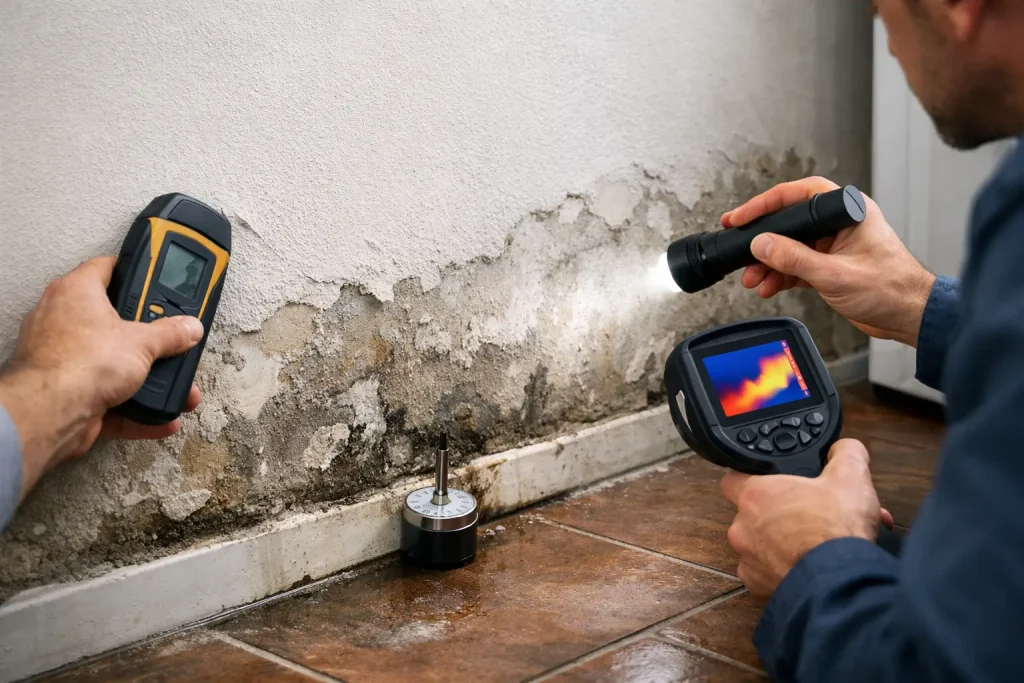
Begin indoors, on a ground-floor or basement wall. Rising damp normally starts at the base of the wall and reduces as you move upwards. Look for a horizontal tide mark, peeling paint, lifting wallpaper, crumbling plaster or a pale, powdery deposit on the surface.
That powder is often salt. As moisture evaporates from the wall, minerals carried from the ground are left behind. You may see white crystals, although some salts are less obvious and leave a grey, fluffy or stained finish instead. Salts are one of the most useful clues because ordinary room condensation does not usually draw ground salts into the wall.
Check whether the affected area is concentrated along the bottom of the wall rather than in a random patch. Rising damp often forms a broad, fairly consistent band. A leak is more likely to create a localised wet area, particularly near a pipe, radiator, shower room, washing machine or external downpipe.
Do not judge the wall from one small mark alone. Check several points along the same wall and compare them with other ground-floor walls. A repeated low-level pattern is far more meaningful than one isolated stain.
Look for damage at skirting-board level
Skirting boards can reveal a great deal. Timber may become soft, distorted or detached from the wall. Paint may blister just above the skirting, while wallpaper can curl at the bottom edge. In more established cases, plaster becomes friable and may break away when touched.
A musty or fungal odour can support the diagnosis, but it is not proof by itself. Damp smells occur with condensation and leaks too. Treat the smell as a warning to investigate, not as the test.
Use a moisture meter carefully
A handheld moisture meter can help compare areas of a wall, but it cannot confirm rising damp on its own. This matters because salts in plaster can cause an electrical moisture meter to show a high reading even when the wall is partly dry. The meter responds to conductivity, and salts conduct electricity.
Use the meter as a pattern-finding tool. Take readings at roughly 100mm, 500mm, 1 metre and 1.5 metres above the floor. Then take readings across the wall, including an area that looks unaffected. If readings are strongest near the floor and reduce with height, this supports the visual evidence for rising damp.
Record what you find rather than relying on one reading. A simple note on your mobile phone with the location, height and date is enough. It gives you a baseline and helps you see whether the problem is stable, worsening or beginning to dry after treatment.
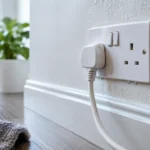
Do not push pins into live electrical areas or test directly beside sockets, switches or concealed cables. If you are unsure where services run, keep clear of those locations.
Rule out condensation before you decide
Condensation happens when warm, moisture-laden indoor air meets a cold surface. It is common in bathrooms, kitchens, bedrooms and poorly ventilated corners. Unlike rising damp, it may appear higher up the wall, around window reveals, behind furniture or on ceilings.
Look for droplets on windows in the morning, black mould in corners and dampness that becomes worse during cold weather or after cooking, showering and drying clothes indoors. These signs point more strongly towards condensation.
A dehumidifier can reduce airborne humidity and may help with condensation management. It does not stop ground moisture travelling through masonry. If salts, low-level tide marks and deteriorating plaster are present, simply removing moisture from the air is unlikely to deal with the source of the wall damage.
It can also be both. A cold, damp wall caused by rising damp may encourage surface condensation, especially in winter. In that case, improving ventilation may reduce mould, but the wall still needs its underlying moisture problem addressed.
Check outside before blaming the wall
External defects can force water into masonry and look similar to rising damp. Walk around the outside of the property after rainfall if possible. Look for overflowing gutters, leaking downpipes, cracked render, missing pointing, blocked gullies and soil or paving built up too high against the wall.
Pay particular attention to the ground level. External soil, paths or decking should not bridge the damp-proof course where one is present. If the outside ground is too high, rainwater can bypass this barrier and enter the wall directly. The damage may still show up indoors at low level, but the cause is penetrating moisture rather than true rising damp.
A localised damp patch beneath a damaged gutter or next to a downpipe is a strong reason to fix drainage first. Then allow time for the wall to dry and monitor it. Masonry does not dry overnight, particularly if it is thick or salt-contaminated.
Eliminate plumbing leaks and internal water sources
Check rooms adjoining the affected wall. A bathroom, kitchen, utility room or boiler cupboard may contain the real cause. Look beneath sinks, around appliance hoses, at radiator valves and near waste pipes. Small leaks can be hidden for months and may only show as a damp wall, loose flooring or a persistent odour.
If the dampness is strongest in one spot, gets worse when a particular appliance is used, or sits above floor level, investigate a leak. Rising damp is normally more gradual and widespread across the lower section of a wall.
For suspected hidden leaks, a qualified plumber is the sensible next step. There is little value in installing a damp solution before stopping active water escaping from a pipe.
A simple test sequence for landlords and homeowners
Keep the diagnosis practical. First, photograph the wall and note whether damage begins at floor level. Next, check for salts, a tide mark and a consistent height across the wall. Compare moisture-meter readings from low to high, then inspect outside drainage, ground levels and nearby pipework.
If the evidence points towards rising damp, avoid sealing the symptoms behind waterproof paint or fresh plaster before the moisture source has been dealt with. That can trap salts and moisture, causing coatings to fail again. The wall needs time and the right conditions to release its existing moisture.
For a typical house, a source-focused electronic damp-control system such as GUARDIAN is designed to operate continuously with very low energy use, helping reverse the movement of moisture through the wall so it can return to the ground through gravity. Correct device selection and central placement matter, much like placing a Wi-Fi router where its signal can reach the whole building.
When to call in further help
Arrange a professional inspection if you find structural cracking, rotten floor timbers, extensive mould, a strong persistent odour, or damp affecting an upper floor with no obvious explanation. These signs may indicate more than one moisture issue, and old buildings in particular can have complex wall construction.
You should also seek advice if the wall is below ground level. Basement damp can involve lateral pressure from surrounding soil, which is different from moisture rising through a ground-floor wall. The solution depends on how water is entering and where it is being held.
The useful part of testing is not giving the wall a label as quickly as possible. It is ruling out the obvious causes, recognising the low-level salt pattern, and choosing a remedy that deals with the moisture route rather than repeatedly covering the damage it leaves behind.