A wall that feels colder than the rest of the room is not always just an insulation problem. If you are asking, why are walls cold, the answer may involve heat escaping through the fabric of the building, moisture held inside the masonry, or both. The difference matters: turning up the heating or running a dehumidifier may make the room feel better temporarily, but neither will stop moisture entering a wall from below ground.
Cold walls are common in older houses, ground-floor rooms, basements and properties with solid brick construction. They can also appear in newer buildings where insulation is missing, poorly fitted or interrupted around corners, windows and floors. Start by identifying where the cold is happening and whether there are signs of damp.
Why are walls cold in some rooms but not others?
A wall feels cold when it is losing heat faster than the air around it can warm it. External walls are usually cooler than internal partitions because one side faces the outdoors. On a cold, wet British day, brick, stone and concrete can draw heat from the room continuously.
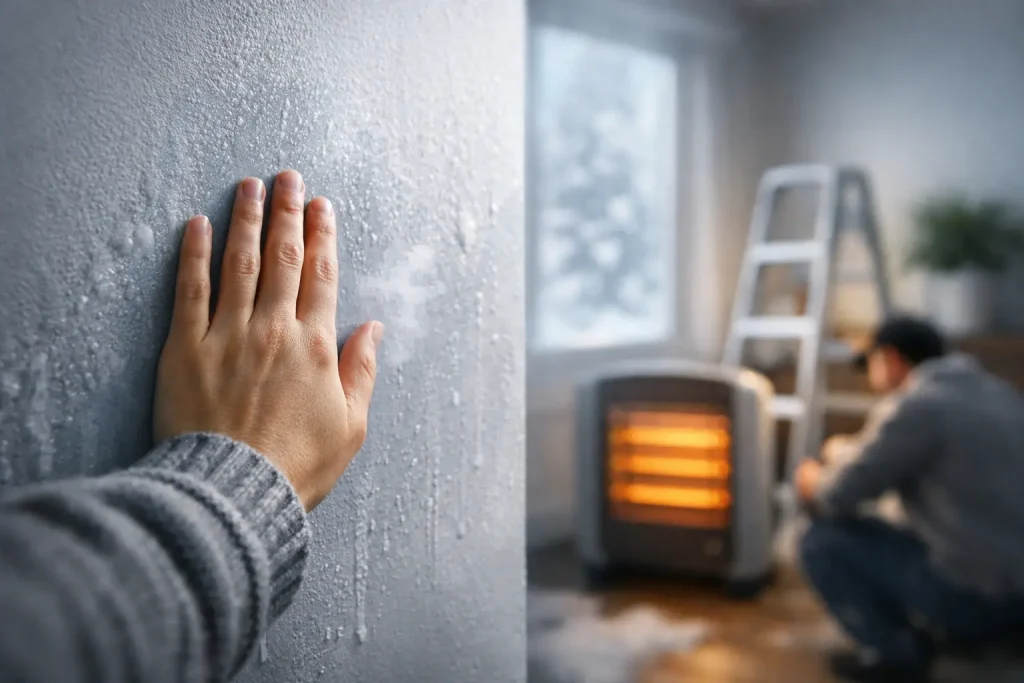
That effect becomes more noticeable when the wall contains moisture. Water conducts heat far more readily than dry air trapped within a wall. A damp wall therefore feels colder to the touch, takes longer to warm up and can make a room feel uncomfortable even when the thermostat says the air temperature is reasonable.
This is why a cold patch deserves attention. It can be a simple thermal weak point, but it can also be an early clue that moisture is affecting the structure.
The main causes of cold walls
Heat loss through poor insulation
Many older homes have solid external walls rather than a cavity that can be insulated. Solid masonry loses heat more quickly, particularly where it is exposed to prevailing wind and rain. Single glazing, draughty frames and uninsulated floors can add to the problem, but the wall itself may still be the coldest surface in the room.
Even cavity-wall homes can have cold areas. Insulation may be absent, unevenly installed or unsuitable for the wall condition. A gap around a window reveal, a concrete lintel, a chimney breast or a junction between wall and floor can form a thermal bridge. Heat takes the easiest route out, leaving a noticeably colder strip or patch.
Insulation improvements can be effective, but only after the wall is confirmed dry and sound. Covering an active damp problem with internal insulation or new finishes can hide the evidence while trapping moisture where it is harder to inspect.
Rising damp from the ground
Cold walls at low level, especially on the ground floor, can point to rising damp. This is moisture travelling upwards from the soil into porous brickwork, mortar and plaster. It normally affects the lower section of a wall and may rise to around 1.5 metres, depending on the building and conditions.
Look beyond temperature alone. Rising damp often leaves a pattern: damaged or bubbling paint, crumbling plaster, white salt deposits, a musty smell, darkening near skirting boards or recurring mould close to the floor. The wall may feel cold and clammy because it is retaining moisture.
A portable air dehumidifier can reduce moisture in the room air. It cannot stop water being drawn into masonry from the ground. If rising damp is the cause, drying the air treats a symptom, while the wall continues to receive moisture at its source.
Condensation on a cold surface
Condensation happens when warm, moisture-laden indoor air meets a surface that is cold enough for water vapour to turn into droplets. Bathrooms, kitchens, bedrooms and rooms where washing is dried indoors are frequent trouble spots.
Condensation mould is commonly seen in corners, behind furniture, around window frames and high on colder external walls. It is often black or dark in colour. Unlike rising damp, it is not usually confined to the lower metre or so of the wall.
Ventilation, steady background heating and reducing indoor moisture production can help. However, do not assume every patch of mould is condensation. A cold, damp wall at low level needs a proper check before you decide on the remedy.
Rain penetration and building defects
Rain can enter through cracked render, failed pointing, damaged brickwork, leaking gutters, roof defects or poorly sealed openings. This is known as penetrating damp. It often worsens after heavy rain and may appear on upper floors, around chimneys, below windows or on an exposed gable wall.
A leaking pipe can create a similar localised cold patch. In these cases, the first job is to stop the water entry. There is little value in redecorating a wall until the external defect or plumbing leak has been repaired and the masonry has had time to dry.
How to tell whether cold walls are linked to damp
Use your eyes, hands and common sense. A wall that is uniformly cold across a large external area may mainly be an insulation issue. A cold area that is also stained, flaky, salty or soft to the touch is more likely to involve moisture.
These signs are worth checking together:
- Coldness concentrated at the bottom of a ground-floor wall
- Blistering paint, loose wallpaper or plaster breaking down
- White, powdery salts on brickwork or plaster
- A persistent earthy or fungal smell
- Damage that returns after cleaning, drying or repainting
The location tells a useful story. Damp around a ceiling, chimney or window may suggest a leak or rain penetration. Mould in an unventilated corner may be condensation. Damp beginning at floor level and working upwards is a stronger rising-damp pattern.
Remember that more than one issue can exist at once. A wall affected by rising damp can also be cold enough to attract condensation. A house with poor ventilation can make all damp symptoms more visible. Diagnosis should separate the source of water from the conditions making it worse.
Why cold damp walls should not be ignored
A cold wall is uncomfortable, but the problem can go beyond comfort. Moisture can weaken plaster, lift finishes, damage timber skirting boards and create conditions where mould and fungal odours thrive. Landlords and property managers should act early, as repeated cosmetic repairs soon become costly and do not resolve the cause.
Heating a damp wall is also inefficient. Part of the heat is continually lost through cold, moisture-heavy masonry. The room may take longer to feel warm, leading occupants to use more energy without achieving a lasting improvement.
For homes with visible low-level damp, the priority is to prevent further moisture travelling into the wall, then allow the existing moisture to dry naturally. This is a gradual process. Thick masonry and plaster do not dry overnight, and repainting too soon can lead to more peeling or staining.
Practical next steps for a cold wall
First, check straightforward defects: overflowing gutters, damaged pointing, cracked render, blocked air bricks, leaking pipes and failed seals around windows or doors. Deal with these promptly, as they can add water to the building fabric.
Next, consider the pattern of the damage. If the wall is cold only in winter and otherwise dry, insulation and thermal bridging may be the main issue. If it is cold, damp and damaged from the floor upwards, investigate rising damp before spending money on redecorating, mould sprays or another dehumidifier.
Where rising damp is identified, a source-focused system is more suitable than managing humidity alone. GUARDIAN damp removal devices are designed to address the electrical-potential difference associated with moisture movement from soil into masonry, allowing existing wall moisture to return downwards through gravity. The device must be selected for the building size and positioned correctly for continuous coverage, much like placing a Wi-Fi router where its signal can reach the required area.
Keep the device operating continuously while the walls dry, and avoid sealing damp surfaces behind impermeable finishes. Maintain sensible ventilation and heating during this period. These measures support drying, but they do not replace stopping the source of moisture.
A cold wall is your property giving you useful information. Check the height of the damage, the condition of the surface and what happens after rain or during colder weather. Once the true cause is clear, you can choose a fix that keeps the wall dry and the room warmer for the long term.