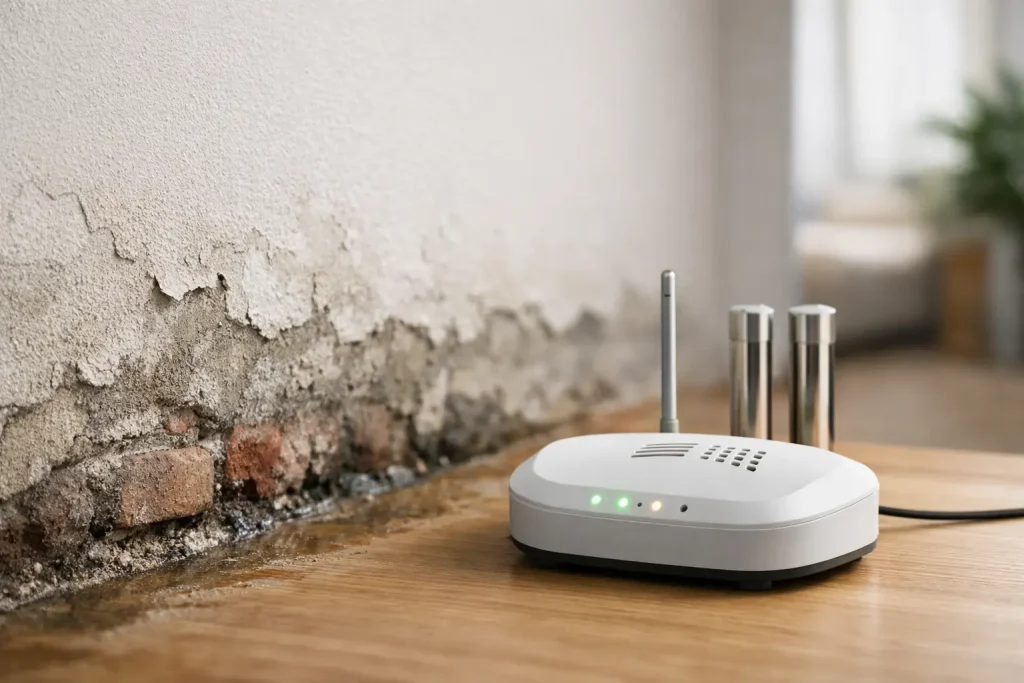
A damp patch that keeps returning after repainting is not a decorating problem. If walls feel cold, plaster is crumbling, salts are appearing and moisture damage is climbing from floor level, you may be dealing with rising damp. Damp devices are designed to address that specific problem at its source, rather than simply drying the air around it.
That distinction matters. A portable dehumidifier can make a room feel more comfortable and reduce condensation. It cannot, however, stop moisture being drawn from the ground into masonry. For homes, flats, basements and commercial premises with genuine rising damp, treating the air alone can become an expensive cycle of emptying water tanks while the wall remains wet.
What damp devices are designed to do
Rising damp occurs when moisture from the ground travels upwards through brickwork, stone or mortar. It can affect walls up to around 1.5 metres above ground level. Older properties are particularly vulnerable, but damage to a physical damp-proof course, changes to external ground levels and construction details can create problems in newer buildings too.
Electronic damp devices work on the electrical potential within the wall and surrounding ground. GUARDIAN devices are designed to remove the potential difference that encourages moisture to travel upwards through the masonry. Once that upward movement is interrupted, the moisture already in the wall can gradually return to the ground through gravity.
Think of static electricity from a hairbrush. You cannot see the charge, but it can influence what happens around it. The same principle applies here: the device works continuously to alter the conditions that support upward moisture movement. It is not a fan, heater or air dehumidifier, and it does not need to extract litres of water from the room to do its job.
First, make sure the problem is rising damp
Not every damp wall is caused by rising damp. This is where many property owners lose time and money. A device intended for rising damp should not be used as a substitute for repairing a leaking gutter, cracked render, defective roof, plumbing leak or bridging of an existing damp-proof course.
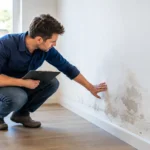
Rising damp usually starts at low level. Common signs include a horizontal tide mark, flaky paint, powdery white salts, deteriorating skirting boards, loose plaster and a musty smell close to the affected wall. Damage is often most obvious on ground-floor walls, basement areas or elevated ground-floor spaces with masonry in contact with, or close to, external soil.
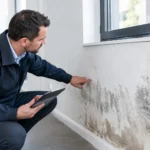
Condensation is different. It commonly appears on windows, in corners, behind furniture and around colder surfaces, especially during winter. Condensation can encourage mould, but it does not normally create a consistent band of salt-contaminated damage rising from the floor.
Penetrating damp is different again. It often worsens after rain and may be concentrated around chimneys, windows, roof junctions, external cracks or failed gutters. Deal with the water entry point first. A clear diagnosis prevents you from expecting one solution to fix several unrelated building faults.
Why a dehumidifier is not the same solution
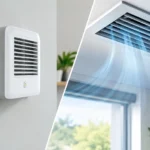
A dehumidifier has a useful role where indoor humidity is high. It can reduce condensation, assist laundry drying and improve comfort in a poorly ventilated room. But it treats moisture that is already in the air.
With rising damp, the wall is being fed by moisture below ground. The dehumidifier may remove some evaporated water from the room, yet the masonry can continue drawing in more. This is why affected walls may remain cold, marked and damp despite a dehumidifier running for long periods.
There is also the running-cost question. A plug-in damp device uses very little electricity and is intended to operate continuously. A compressor dehumidifier generally uses more power, needs regular emptying or drainage and may be noisy in occupied rooms. The right choice depends on the cause. If the issue is humidity, use humidity control. If the issue is rising damp, address the rising damp.
Choosing damp devices for the building
Coverage is the practical starting point. The device needs to be matched to the size and layout of the property, not just the room with the worst visible patch. Electronic protection spreads through the building structure in a similar way to Wi-Fi coverage: placement and radius matter.
For a typical family house, a HOME model may be appropriate. Larger residential properties, commercial buildings and sites with wider footprints may need a PRO 15 or PRO 25 model, depending on the required coverage radius. A building with thick internal walls, separate wings, extensions or multiple levels may require more careful planning than a simple rectangular home.
Do not select a unit purely by the size of one affected wall. Rising damp is linked to ground-contact masonry, so the coverage must account for the whole area that needs protection. In larger premises, more than one device may be the sensible option. This is especially relevant for converted buildings, long commercial units and properties split into distinct structural sections.
Place the device centrally where possible
Positioning is not an afterthought. Install the device as centrally as practical within the area it is intended to cover, ideally on an internal wall and at a suitable height for the model. Avoid placing it at the extreme edge of the building if a central location is available.
The aim is to give the device the best opportunity to cover the relevant ground-contact walls. A cupboard, utility space or hallway can often work well, provided the unit remains connected to power and is not isolated beyond the intended coverage area. Follow the supplied installation guidance for mounting height, clearances and electrical connection.
Keep the unit powered continuously
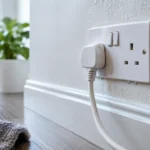
A damp device is not a one-hour treatment or a seasonal appliance. It is designed for continuous operation. Switching it off at the socket for long periods removes the protection it provides, so choose a location with a reliable mains supply that will not be needed for another appliance.
The installation itself is straightforward: mount the unit securely, connect it to a suitable socket and leave it operating. There is no need for chemical injection, disruptive replastering or lifting floors simply to install the device. That is a major advantage for occupied homes, rental properties and businesses that cannot pause operations for invasive damp work.
What to expect after installation
Walls do not dry overnight. Masonry can hold a surprising amount of moisture, especially where rising damp has been present for years. The drying period depends on wall thickness, construction, salt contamination, ventilation, heating patterns and the extent of existing damage.
In the early stages, visual changes can be uneven. Some areas may look worse before they look better as salts move through the drying wall. Do not rush to repaint or replaster a wall that has not had time to dry. Sealing damp masonry too early can trap moisture and spoil the finish.
Keep rooms reasonably ventilated and heated in normal use. Remove or loosen furniture positioned tightly against affected walls so air can circulate. If there is surface mould caused by condensation as well as rising damp, clean it safely and deal with the ventilation issue separately. One property can have more than one moisture problem.
Once the wall has dried sufficiently, damaged plaster, salts and finishes can be repaired as needed. This sequence is important: stop the cause first, allow drying time, then restore the surface. Redecorating first may make the damage disappear briefly, but it will not make the source disappear.
Protect the property, not just its appearance
Persistent damp damages more than paintwork. It can weaken plaster, stain finishes, create fungal odours and make rooms feel colder than they should. For landlords and property managers, it can also lead to repeat maintenance calls and frustrated occupants. For homeowners, it often means spending repeatedly on cosmetic repairs that fail.
The practical response is to identify the moisture path and choose a remedy that matches it. Check gutters, roofs, plumbing, drains and external ground levels. If the symptoms point to genuine rising damp, a correctly selected and positioned electronic device offers a non-invasive route to ongoing protection.
Do not wait for a small tide mark to become failed plaster and ruined decoration. Deal with the cause while the repair is still manageable, then give the building the time it needs to dry naturally.