A damp patch is not a diagnosis. Rising damp versus penetrating moisture can look similar on a painted wall, but the water is entering the building in different ways. Get the cause wrong and you can spend money drying air, repainting plaster or fitting a treatment that never addresses the real problem.
For homeowners, landlords and property managers, the first useful question is simple: does moisture appear to be travelling up from the ground, or is it coming through the wall from outside? The pattern, location and timing usually provide the answer.
Rising damp versus penetrating moisture: the key difference
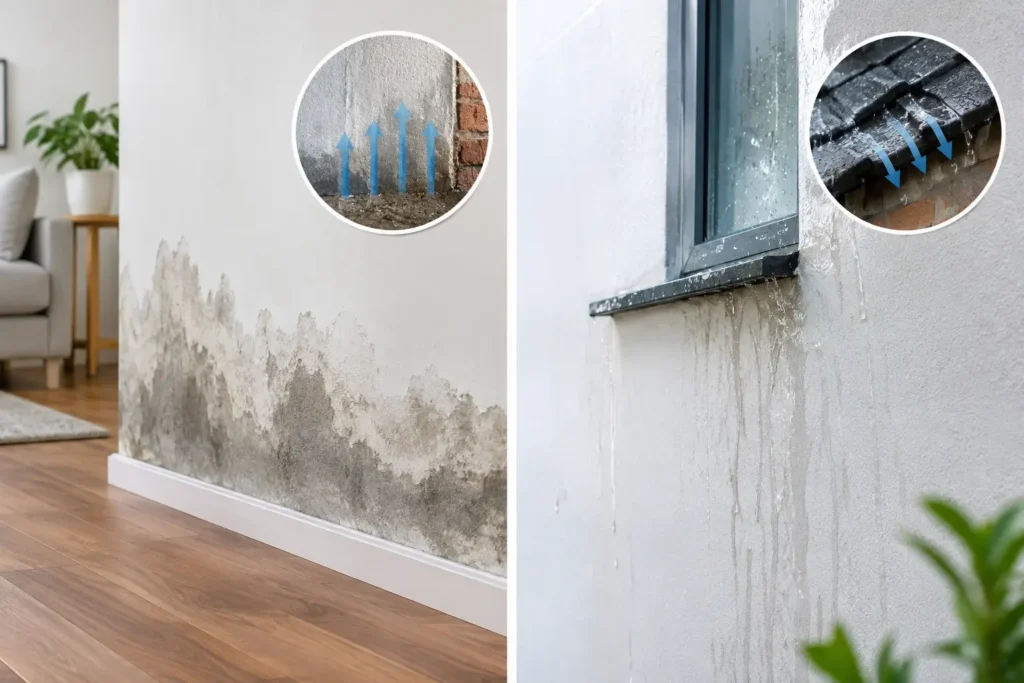
Rising damp starts at ground level. Moisture from the soil travels into masonry and can move upwards through pores in bricks, mortar and plaster. It is commonly associated with damp damage on ground-floor walls, basements and lower sections of external or internal walls. The visible damage often reaches up to around 1.5 metres, although every building is different.
Penetrating moisture enters from the side or above. Rainwater finds a route through defective brickwork, cracked render, leaking gutters, failed flashing, damaged pointing, blocked drains or gaps around windows and doors. It can affect any height of a wall and often becomes worse after wind-driven rain.
That distinction matters because a dehumidifier does not stop either source. It may remove some moisture from room air and make the space feel more comfortable, but it cannot repair a leaking gutter or stop ground moisture entering masonry. Treat the route of the water first, then allow the building to dry.
Signs of rising damp
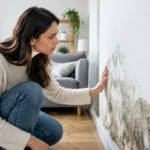
Rising damp tends to leave a recognisable low-level pattern. Look for a tide mark, peeling paint, bubbling wallpaper, crumbling plaster or powdery white salts close to the floor. Walls may feel cold and damp, and rooms can develop a stale, fungal odour.
Salts are a particularly useful clue. As moisture moves through masonry and evaporates, it can leave mineral deposits behind. These deposits may be white and fluffy, or they may appear as hard, discoloured staining. Repainting without dealing with the moisture source usually leads to the same damage returning.
Other signs include decayed skirting boards, lifting floor finishes and deterioration around the base of a wall. Do not assume every low-level damp patch is rising damp, however. A leaking pipe, bridged damp-proof course, blocked air brick or high external ground level can create a similar result. The building needs a proper, practical inspection.
Why ground level matters
Check outside before making decisions indoors. Soil, paving, decking, render or a raised flower bed may sit too high against the wall. This can bridge protection intended to keep moisture out of the masonry. Water then has a direct route into the building fabric.
Also inspect drains and gullies nearby. Constantly wet ground beside a wall increases the moisture load that the building must resist. Fixing drainage and reducing external ground levels may be essential parts of the remedy.
Signs of penetrating moisture
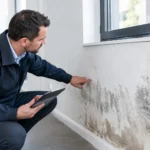
Penetrating moisture is usually less tidy. It may show as an isolated patch on a chimney breast, around a window reveal, beneath a roofline or halfway up an external wall. The location often points towards the defect.
If a stain darkens after heavy rain and improves during dry weather, suspect rain penetration. Check guttering for overflow, downpipes for leaks, roof tiles and flashing for damage, and brickwork for open joints or cracks. Wind can drive rain through surprisingly small faults, particularly on exposed elevations.
Inside, penetrating moisture can cause damp plaster, mould growth and damaged decoration, but it does not always create the salt band associated with rising damp. A patch high on a wall is unlikely to be rising damp. Equally, a damp lower wall after rainfall may be caused by water spilling from a blocked gutter rather than moisture rising from the ground.
Do not confuse either problem with condensation
Condensation forms when warm, moisture-laden air meets a cold surface. It is common on windows, in corners, behind furniture and in bathrooms or bedrooms with poor ventilation. It often looks like surface droplets, black mould or recurring dampness in cold weather.
Ventilation, steady heating and sensible use of extractor fans can reduce condensation. Those measures are worthwhile, but they will not solve a wet wall caused by external water ingress or rising moisture from the ground. Different problem, different fix.
A practical way to inspect a damp wall
Start outdoors on a dry day and follow the likely water routes. Check the roof edge, gutters, downpipes, pointing, render, window seals, air bricks, paving levels and drainage. Then inspect the same area from inside.
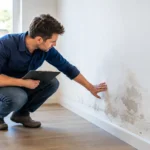
Record where the damage starts and ends. Is it confined to the lower metre of wall? Does it correspond with a downpipe, chimney, crack or external step? Does it worsen after rain? Photographs taken over several weeks can reveal a pattern that one inspection misses.
Be cautious with handheld damp meters. They are useful indicators, not a final diagnosis. Salts in plaster can produce high readings even after a wall has begun drying. Use the meter alongside visible evidence, building layout and weather conditions rather than relying on one number.
If there is a plumbing route nearby, rule that out too. A slow leak behind a kitchen unit, radiator pipe or bathroom wall can imitate both rising damp and penetrating moisture. Water use, pipework pressure and localised staining may provide clues.
Matching the remedy to the cause
For penetrating moisture, repair the defect that allows water in. This may mean clearing and repairing gutters, replacing broken tiles, renewing flashing, repointing damaged masonry, sealing a failed window perimeter or correcting drainage. Allow time for the wall to dry before replastering or redecorating. Thick masonry does not dry overnight.
For rising damp, the aim is to stop moisture travelling upwards through the wall. First remove obvious bridges and reduce unnecessary external moisture. Where a continuing rising-damp problem is identified, a source-focused solution is needed rather than an appliance that only treats humid room air.
GUARDIAN damp removal devices are designed to address the electrical-potential difference associated with ground moisture travelling into masonry. Installed centrally and left operating continuously, the device is intended to allow existing wall moisture to return towards the ground through gravity. Model choice depends on the building size and coverage required: HOME suits family houses, while PRO 15 and PRO 25 are intended for larger residential and commercial properties.
Placement matters. Think of coverage in the same way as a Wi-Fi router: position is central to performance. Install the unit in line with the guidance for the building, connect it to a suitable power supply and leave it running continuously. It uses very little electricity, but switching it off removes ongoing protection.
Allow for drying, not just repair
A wall that has been wet for years needs time. As moisture reduces, salts and damaged plaster may still need attention. Loose material should be removed, and redecorating should wait until the surface has had a fair opportunity to dry. Breathable finishes can be more suitable than sealing damp into a wall with heavy, non-breathable coatings.
Keep rooms reasonably ventilated during the drying period. A dehumidifier can support comfort and help remove moisture from air, particularly in occupied rooms, but it remains a supporting tool. It is not the cure for rising damp or rain penetrating through a defect.
If the evidence is mixed, do not guess. A property can have more than one moisture issue at once: a bridged wall at ground level, overflowing guttering above and condensation in a cold corner. Deal with each route separately and the building has a genuine chance to dry.
The useful next step is to inspect the wall from ground to roofline, note what changes after rain, and act on the water route you find. Damp problems become far more manageable when the remedy follows the cause.