A wall can look dry, feel dry and still become damp again weeks later. So, will damp return after drying? Yes, if the cause of the moisture has not been stopped. Drying the surface is not the same as fixing the movement of water through the building fabric.
This is why many property owners run a dehumidifier, repaint the wall and hope for the best, only to find peeling paint, a musty smell or damp patches returning. The correct response depends on where the water is coming from.
Will damp return after drying if it is rising damp?
Rising damp can return because the wall is still drawing moisture from the ground. Masonry is full of tiny pores, rather like a sponge. When there is an electrical-potential difference between the ground and the wall, moisture can be encouraged to travel upwards through those pores.
A dehumidifier removes water from the air. It may make a room feel more comfortable and reduce condensation, but it does not stop ground moisture entering the wall. Once it is switched off, or when conditions become colder and wetter, the original problem can show itself again.
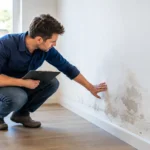
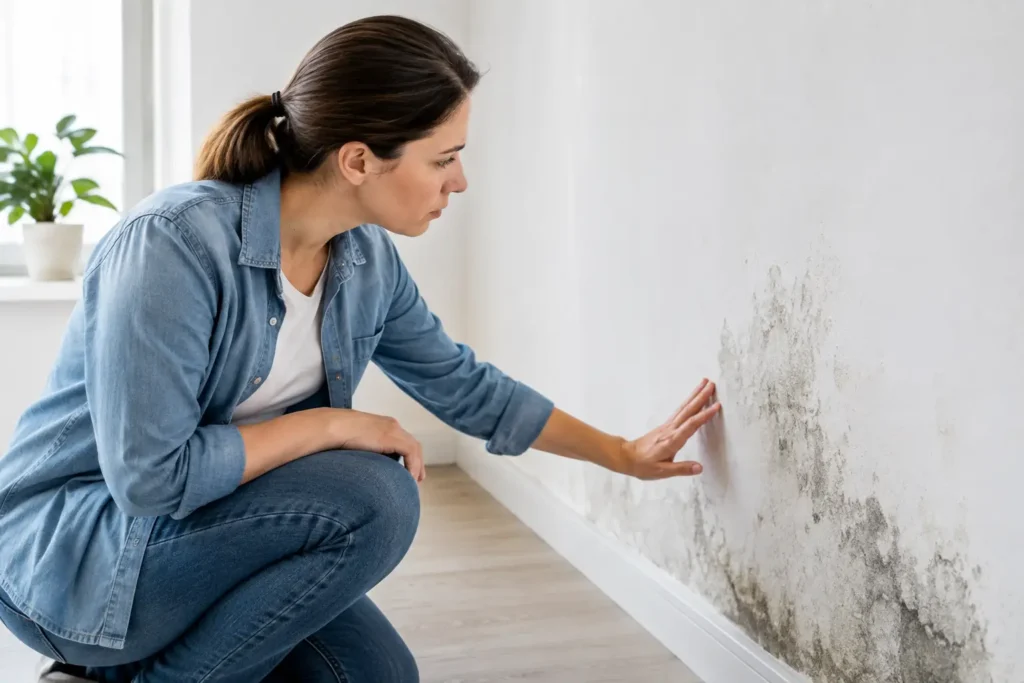
If you have damp damage concentrated on ground-floor walls, usually up to around 1.5 metres high, rising damp should be considered. Common signs include crumbling plaster, flaking paint, white salt deposits, a cold lower wall and a persistent stale or fungal odour.
The key point is simple: a wall will only stay dry when the moisture source has been controlled. Drying is the recovery stage, not the cure.
Why a wall can look better before it is actually dry
Walls dry slowly. A solid brick wall that has held moisture for years will not become dry overnight, even after the cause is addressed. Moisture needs time to move back through the masonry and evaporate safely from the surface.
The first improvement is often visual. Damp staining may stop spreading, the wall may feel less cold, and the room may smell fresher. These are encouraging signs, but they do not mean the wall has completed its drying process.
Salts can also confuse the picture. As moisture travels through masonry, it can carry salts to the surface. After the wall begins drying, those salts may remain in old plaster and continue to attract water from the air. A patch can therefore look damp even when fresh ground moisture is no longer rising through the wall.
For this reason, avoid rushing into decorative repairs. Repainting a wet or salt-contaminated wall often leads to blistering and peeling. Let the wall dry properly first, then assess whether damaged plaster or finishes need to be removed and renewed.
First, identify the real cause of the damp
Not every damp wall is rising damp. A correct diagnosis prevents wasted money and repeated repairs.
Condensation is usually worse in bathrooms, kitchens, bedrooms and poorly ventilated rooms. You may see water droplets on windows, black mould in corners or behind furniture, and dampness that varies with cooking, showering and drying clothes indoors. Better ventilation, steady background heating and sensible moisture control are normally needed.
Penetrating damp comes from outside. It can be caused by damaged pointing, cracked render, blocked gutters, leaking downpipes, defective flashing or high external ground levels. It may appear higher up a wall, become worse after heavy rain, or form a localised patch rather than a band along the bottom of the wall.
A plumbing leak can create damp at any level and may worsen even during dry weather. Check pipework, appliances, radiator valves and hidden connections before assuming the issue is rising damp.
Rising damp is most likely where the damage begins at the base of a ground-floor wall and moves upwards in a fairly even pattern. It is particularly common in older properties, basements and walls where the original damp-proof protection is absent, bridged or no longer effective.
Stop treating the air when the wall is wet
Air dehumidifiers have a place. They can reduce humidity while laundry is drying, help control condensation and make a room more comfortable during the drying period. But they are not a permanent answer to moisture being pulled into masonry from below.
Think of it like mopping a floor beneath a slow leak. The floor may look dry for a while, but the water returns until the leak is stopped. The same principle applies to rising damp. Treating airborne moisture alone leaves the wall source untouched.
A source-focused system is designed to prevent the conditions that allow moisture to travel upwards through the wall. GUARDIAN damp removal devices are intended to work continuously at low power, helping existing moisture return towards the ground through gravity rather than continuing to rise through the masonry.
This approach is non-invasive. There is no need to inject chemicals into every wall or begin disruptive building work simply to address the rising-damp mechanism. However, it must be matched to the property correctly and installed in the right position.
Give the building time to dry after treatment
Once the cause is controlled, patience matters. The drying time depends on wall thickness, construction, the amount of stored moisture, room temperature, ventilation and the condition of internal plaster.
Do not judge progress from one rainy day, one cold week or a single metre reading. Moisture readings can be influenced by salts, and conditions within a wall change gradually. Instead, look for a sustained pattern over time: no expanding damp band, no new staining, a reduction in coldness and a wall that increasingly holds decoration.
Keep rooms sensibly ventilated while the wall dries. Open trickle vents where fitted, use extractor fans in kitchens and bathrooms, and avoid pushing large furniture tightly against affected walls. Leave a small air gap so the surface can breathe.
Heating should be steady rather than extreme. Turning the heating high for a few hours may dry the surface quickly while leaving moisture deeper in the wall. A stable indoor temperature supports gradual, even drying.
Avoid the mistakes that make damp reappear
The most common mistake is covering the evidence too soon. Fresh paint, wallpaper or waterproof coatings can trap moisture and hide the problem until the finish fails. Wait until the wall has dried and any salt-damaged material has been dealt with.
Another mistake is placing all responsibility on a dehumidifier. It may collect litres of water, but that does not tell you where the water originated. If the wall is still receiving moisture from the ground, the machine is managing a symptom, not eliminating the cause.
Also check the outside of the property. Keep external ground levels below the internal floor level where possible, maintain gutters and downpipes, and make sure rainwater is directed away from the building. These practical checks prevent additional water from confusing the diagnosis.
Finally, do not switch off a source-control device as soon as the wall looks better. Rising damp protection should be continuous. The building may take time to release stored moisture, and ongoing operation helps maintain the conditions that keep moisture from travelling upwards again.
Choosing coverage for the property
The device must suit the scale and layout of the building. A family house requires different coverage from a large converted property, commercial unit or building with extensive ground-floor walls. Positioning also matters because coverage works more like a Wi-Fi router than a portable heater: central placement and the right model help the signal reach the area it needs to protect.
Before choosing any system, consider the building footprint, wall layout, number of floors and whether there are separate wings or substantial extensions. Larger premises may need a higher-capacity model or more than one device to provide appropriate coverage.
For a straightforward installation, use a suitable mains supply, follow the supplied placement guidance and leave the unit operating continuously. There is no daily emptying of water tanks and no need to keep moving equipment from room to room.
A dry wall is not achieved by hiding the stain. It is achieved by stopping the moisture source, allowing the masonry to release what it already holds, and giving the property the time it needs to recover.