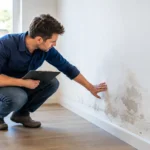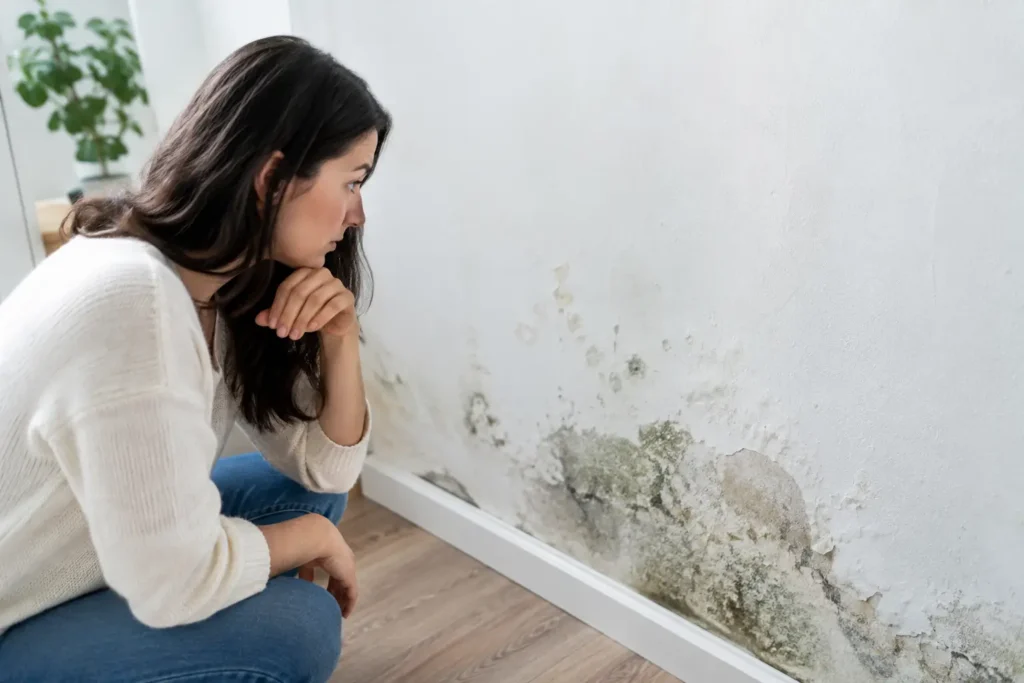
A damp patch low on a wall is easy to ignore at first. Then the paint begins to bubble, a white powder appears, and the skirting board starts to soften. These are common rising damp symptoms, and they can point to moisture moving up from the ground into the masonry rather than a simple ventilation problem.
Rising damp needs the right response. A portable dehumidifier may make a room feel drier, but it does not stop ground moisture entering the wall. Before spending money on cosmetic repairs or repeated mould cleaning, establish where the moisture is coming from.
The main rising damp symptoms to look for
Rising damp normally starts at the base of a ground-floor wall and works upwards. It is often found on internal walls, outside-facing walls, cellar walls and walls next to solid floors. In many properties, visible damage can reach around 1 to 1.5 metres above ground level.
The clearest sign is a horizontal tide mark. This brownish or yellowish line forms as water evaporates from the wall and leaves mineral salts behind. It may look like an old water stain, but unlike a one-off spill or leak, it tends to return after repainting.
You may also see white, dusty deposits on brickwork, plaster or floor edges. These salts are carried in with ground moisture. They can push paint away from the surface and make plaster weak, gritty or crumbly. Wallpaper may lift at the seams, while timber skirting boards can become swollen, stained or rotten.
Other signs are less obvious. A room can feel cold at the lower part of the wall, have a persistent musty smell, or develop mould where furniture restricts airflow. Mould is not proof of rising damp on its own, but when it appears alongside salts, damaged plaster and low-level staining, it deserves proper investigation.
Rising damp or condensation? The difference matters
Condensation is caused by moist indoor air settling on cold surfaces. It is common in bathrooms, kitchens, bedrooms and poorly ventilated corners. It often appears on windows, behind wardrobes, around ceilings and in upper-floor rooms. Black spot mould is a typical condensation warning sign.
Rising damp behaves differently. It begins low down, follows the line of the wall and carries salts. It is usually more noticeable on ground floors or in basements. The wall may be damp to touch near the floor, even when the room is heated and ventilated.
A dehumidifier can be useful for managing condensation, drying laundry or improving comfort during a wet spell. It removes water from the air. It cannot, however, prevent moisture travelling through masonry from the soil. Treating rising damp only with a dehumidifier can mean higher electricity use while the wall continues to deteriorate behind fresh paint.
Do not assume every low-level damp patch is rising damp
A correct diagnosis protects your building and your budget. Rain penetration, leaking gutters, damaged pointing, failed external render, plumbing leaks and poor drainage can all create damp walls. These problems need their own repairs.
Start outside. Check whether ground levels, paving, soil or flower beds sit too high against the external wall. Look for blocked gutters, overflowing downpipes, cracked drainpipes and damaged brickwork. Water should be directed away from the building, not allowed to soak repeatedly into the base of the wall.
Then look inside. A localised wet patch below a radiator, pipe or appliance may indicate a leak. Damp that worsens after heavy rain may suggest a defect in the building exterior. Rising damp is more likely when the pattern is broad, low-level and persistent, with salts and deteriorating finishes.
Older homes can have several moisture issues at once. For example, a damp ground-floor wall may be affected by rising moisture, while condensation adds mould behind a sofa. This is why simply treating the visible surface is rarely enough.
Why plaster and paint keep failing
Moisture in masonry does more than discolour a wall. As it evaporates, it leaves salts in the plaster. Those salts attract further moisture from the air and can continue to damage finishes even after the wall starts drying.
That is why repainting can appear successful for a few months, then fail again. Standard filler and paint can trap the problem rather than resolve it. If plaster has become heavily contaminated, loose or blown, it may need to be removed and renewed once the moisture source is under control.
Drying is not instant. Masonry stores a great deal of water, particularly in thick solid walls. The time required depends on wall thickness, construction, salt contamination, heating, ventilation and the severity of the damp. Expect gradual improvement, not a wall that becomes dry in a weekend.
What to do when you spot rising damp symptoms
First, take clear photographs of tide marks, salt deposits and damaged finishes. Note where they begin and how high they reach. This gives you a useful record, especially for landlords, managing agents and commercial property managers responsible for several rooms or buildings.
Next, deal with obvious external defects and leaks. There is no value in fitting a damp-control solution while a broken gutter is pouring water down the wall. Keep external ground levels sensible and avoid bridging any existing damp-proof course with soil, render or paving.
If the evidence points to moisture rising from the ground, choose a solution that addresses this route through the wall. GUARDIAN electronic damp-removal devices are designed to operate continuously, addressing the electrical-potential difference associated with moisture movement in masonry. The aim is to help existing wall moisture return to the ground naturally through gravity, without disruptive injections or major building work.
For a family house, device choice and placement should match the building footprint and wall layout. Larger homes, mixed-use premises and commercial buildings may need wider coverage or more than one unit. Think of coverage like a Wi-Fi router: positioning matters, thick walls affect the area served, and a central location is often more effective than placing a device at the far edge of the property.
Install the device as instructed, connect it to a suitable electrical supply and leave it operating continuously. Switching it off regularly interrupts protection. It is also sensible to keep rooms reasonably ventilated and heated while the building dries, but do not mistake these supporting measures for the main treatment.
When professional inspection is sensible
Call for a proper inspection if you can see structural timber decay, extensive mould, damaged electrical fittings, a strong sewage smell, or a damp patch that is rapidly spreading. These can indicate a separate urgent issue, such as a plumbing failure, drainage fault or roof leak.
For rented property, act early. Damp damage can affect decoration, flooring, furniture and tenant comfort, while delayed repairs often become more expensive. Facilities managers should also review adjacent rooms and similar elevations. Repeated low-level damage across a site may reveal a wider ground-moisture issue rather than isolated decorating faults.
A wall does not need to be visibly dripping to be causing damage. If the lower plaster is crumbling, salts are returning and paint will not stay put, treat the pattern seriously. Start with the source, allow the masonry time to dry, and only then spend money on the finish you want to keep.