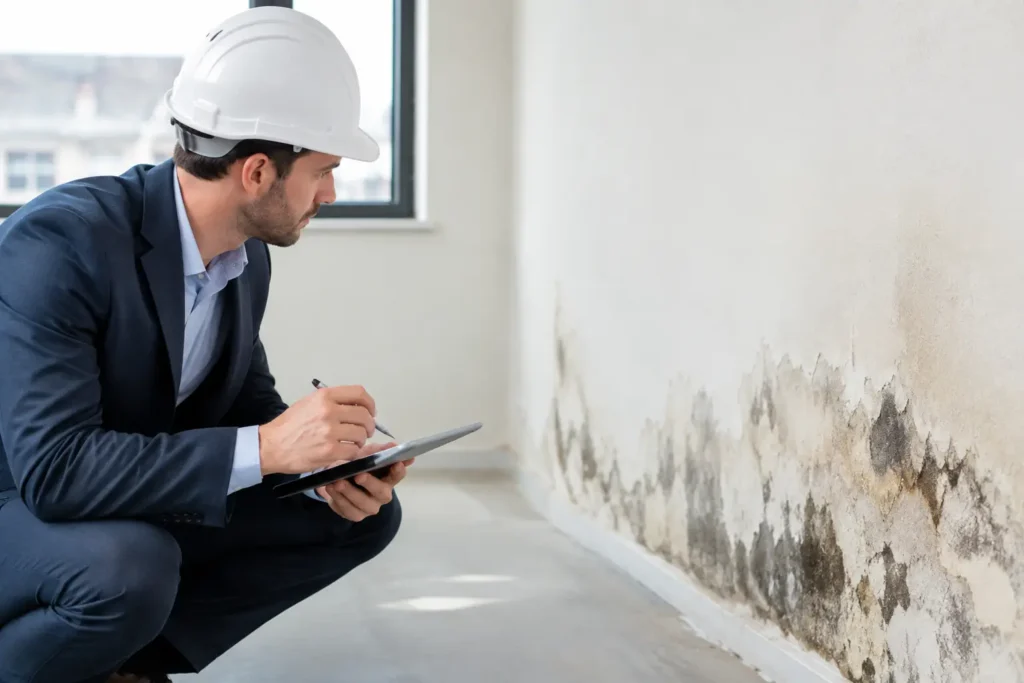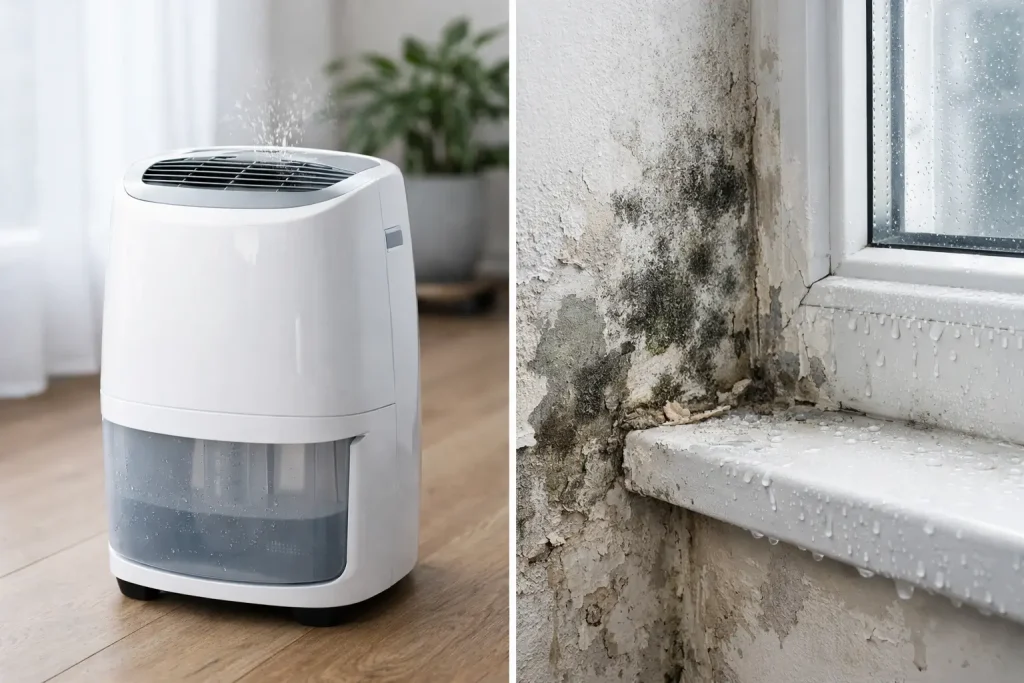
A dehumidifier versus damp comparison can be misleading if the wall is wet from the ground up. A dehumidifier removes moisture from the air. It may make a room feel more comfortable and reduce condensation, but it cannot stop water travelling into masonry from the soil below. If paint is peeling, plaster is crumbling or salts are appearing low on a wall, you need to identify the type of damp before spending money on the wrong solution.
A dehumidifier versus damp: treat the right problem
A portable dehumidifier works by drawing damp air over cold coils or through a desiccant system. Water is collected in a tank or sent to a drain. This is useful when excess moisture is in the air, particularly after drying laundry indoors, cooking, showering or dealing with temporary condensation.
Rising damp is different. It affects walls at ground-floor level, basements and sometimes elevated ground-floor spaces. Moisture from the soil can move into porous brickwork and mortar, carrying salts with it. The visible damage commonly starts near the skirting board and may rise to around 1.5 metres, although every building is different.
Running a dehumidifier near that wall can dry the room air and reduce the amount of surface moisture. It does not remove the route by which moisture is entering the masonry. The appliance may run for months, collect litres of water and still leave the underlying wall damp. That is symptom control, not source control.
How to tell whether you have rising damp
The location and pattern of damage matter. Condensation usually forms on colder surfaces, such as windows, external corners and behind furniture where air cannot circulate. It may be worse in winter, after showers or when rooms are not ventilated.
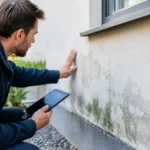
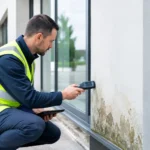
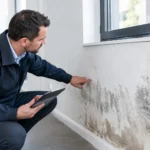
Rising damp is more likely when the damage is concentrated at the base of a ground-floor wall. Look for a horizontal tide mark, bubbling paint, discoloured plaster, powdery white salts, a stale smell or skirting boards beginning to deteriorate. Walls can also feel cold and remain slow to dry even when the room is ventilated.
Do not assume every low-level damp patch is rising damp. Leaking gutters, damaged pointing, bridged damp-proof courses, plumbing leaks and poor external ground levels can all introduce water. A dehumidifier will not repair any of these faults either. Start by checking obvious external and plumbing causes, then assess the pattern inside the property.
The simple test: where is the moisture coming from?
Ask one practical question: is the moisture being produced inside the room, arriving from outside through a defect, or travelling up from the ground? A dehumidifier is designed for the first situation. Repairs are needed for the second. A rising-damp solution is needed for the third.
This distinction prevents a common and costly cycle. A property owner sees mould or damp plaster, buys a dehumidifier, empties the tank every day and assumes progress is being made. Meanwhile, salts continue to damage finishes and the wall remains wet behind fresh paint.
When a dehumidifier is useful
A dehumidifier is not a bad appliance. It is simply not a cure for every damp problem. It can be valuable in a bathroom without an extractor fan, a utility room used for drying clothes, a newly plastered room during its drying period, or a space with short-term high humidity.
It can also support comfort while a wall is drying after the source of water has been dealt with. Lower room humidity may help evaporation from surfaces, but it should not be presented as proof that the cause of rising damp has been removed.
There are practical trade-offs. Compressor dehumidifiers generally work well in warmer rooms but can be less effective in cold spaces. Desiccant units often suit cooler conditions, yet may use more electricity. Both need regular emptying or drainage, cleaning and continuous attention. If the issue is persistent ground moisture, those running costs and daily tasks can become a permanent routine without delivering a permanent answer.
Why damp walls need source-level action
Masonry is not waterproof by default. Brick, mortar and plaster contain tiny pores. When conditions allow, moisture can move through them. As water evaporates from the wall surface, it can leave mineral salts behind. Those salts attract moisture and continue to affect decoration, even after the wall appears dry.
That is why repainting too early often fails. Ordinary paint can blister or peel because the wall beneath it has not dried. Covering the problem with waterproof coatings may also trap moisture in the structure, moving damage elsewhere rather than solving it.
A proper rising-damp approach aims to stop the mechanism driving moisture upwards, then gives the wall time to dry naturally. Drying is not immediate. Thick walls, dense materials, existing salts, weather conditions and the original level of saturation all affect the timescale. Expect gradual improvement, not an overnight transformation.
A non-invasive option for persistent rising damp
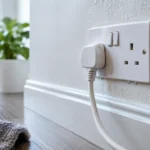
Electronic damp-control systems are designed for properties where rising damp has been identified and a non-invasive route is preferred. GUARDIAN damp removal devices are plug-in units designed to address the electrical-potential difference the system identifies as contributing to moisture movement from soil into masonry. The aim is to allow existing wall moisture to return downwards through gravity while the building dries over time.
Think of the coverage in the same way as a Wi-Fi router. The device needs to be placed where it can cover the relevant building area, rather than hidden in an unsuitable corner. Model choice depends on the size and type of property. A family house requires different coverage from a larger commercial building, block of flats or extended premises.
The appeal is straightforward: no chemical injection, no major wall cutting and no daily water tank to empty. The device remains connected for continuous operation, using low power while providing ongoing protection. However, it still needs correct selection and placement. A unit chosen for too small an area cannot be expected to protect a larger building.
Placement matters more than people expect
Install the device in a central, accessible location appropriate to the coverage required. Avoid treating it like a portable dehumidifier that can be moved from room to room whenever a patch looks worse. Rising damp is a building-level issue, so the system needs stable, continuous operation.
Follow the supplied installation guidance for mounting height, power supply and coverage radius. Do not disconnect the unit once walls begin to look better. The purpose is ongoing protection, not a short burst of drying.
What to do before replacing plaster or paint
Once the moisture source has been addressed, allow time for the wall to dry. This is the stage where patience protects your budget. Salt-contaminated plaster may need specialist treatment or replacement, especially where it has lost strength. Skirting boards and timber at the base of the wall should also be checked for deterioration.
Avoid using a moisture reading alone as the final answer. Salt deposits can influence some meters and give confusing results. Consider the full picture: the height of the original damage, the condition of plaster, visible salts, external ground levels, plumbing and how the wall changes over time.
If mould is present, clean it safely and improve ventilation, but do not confuse mould removal with damp remediation. Mould can be a surface result of high humidity or cold surfaces. Rising damp is a moisture-entry issue within the wall. The two may exist together, which is why diagnosis comes first.
Choose the solution that matches the evidence
Use a dehumidifier when indoor humidity is the problem. Use repairs where water is entering through a defect. Where the evidence points to rising damp, choose a solution designed to address rising damp at its source and allow the masonry to dry in its own time.
The most helpful next step is to inspect the base of the affected walls carefully, check outside levels and drainage, and record where the damage begins and ends. That small amount of investigation can stop you from buying a machine that dries the air while the wall continues to absorb water.