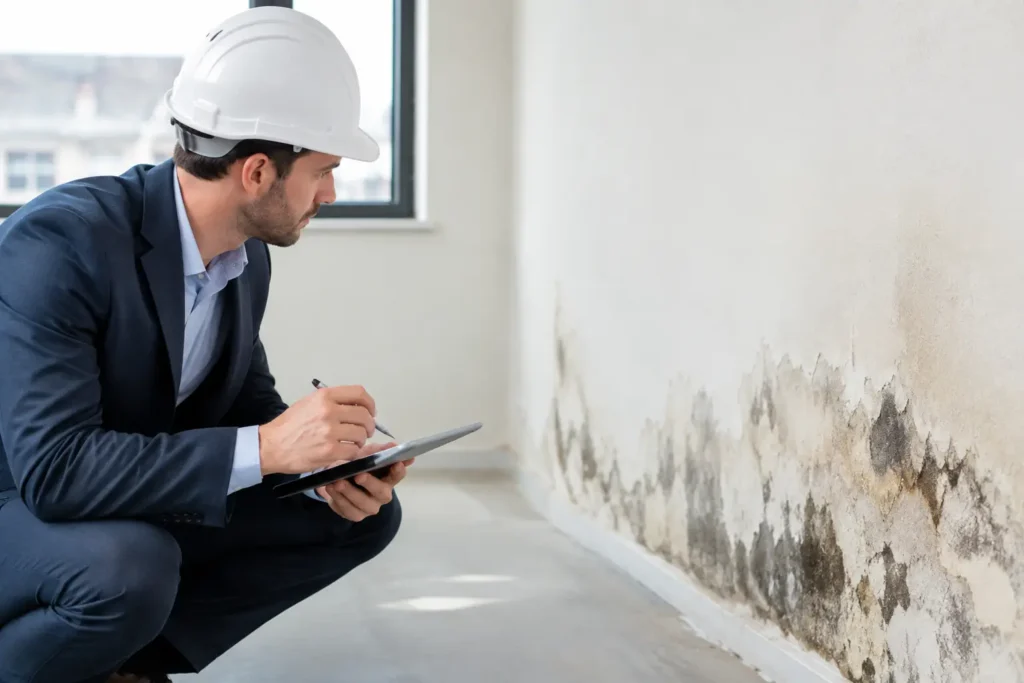
A dehumidifier may fill with water every day, yet the plaster on one ground-floor wall continues to crumble. That is the crucial difference in the damp versus humidity question: removing moisture from the air does not necessarily stop moisture entering the wall.
For homeowners, landlords and property managers, getting this diagnosis right avoids wasted electricity, repeated decorating and a problem that quietly worsens behind furniture. Humidity is moisture in the air. Damp is unwanted moisture within the building fabric. They can occur together, but they do not have the same cause or need the same remedy.
Damp versus humidity: the key difference
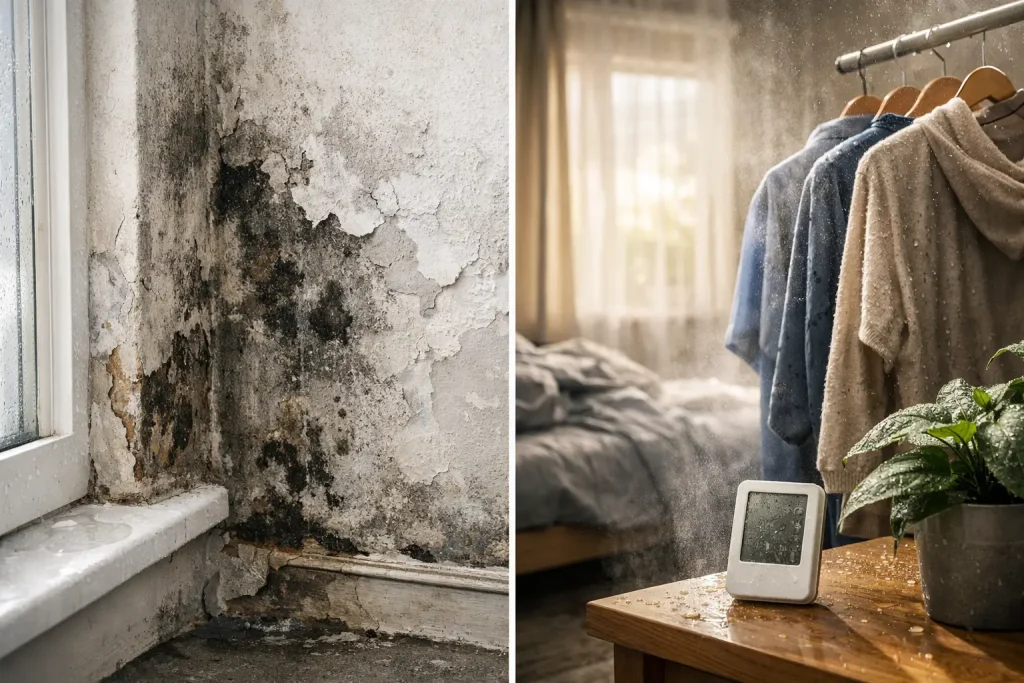
Humidity is measured in the air as relative humidity. It rises when everyday moisture has nowhere to go: showering, cooking, drying clothes indoors, poor ventilation, or simply cold weather with windows kept shut. When warm, moisture-laden air touches a cold surface, it can form condensation. You may see water on windows, black mould around reveals, or droplets on cold pipes.
Damp describes moisture affecting materials such as brickwork, plaster, timber or floors. It may be caused by condensation, a leaking roof, defective gutters, plumbing leaks, penetrating rain or moisture rising from the ground. The word is broad, which is why a visible damp patch should never be treated as a diagnosis on its own.
Think of humidity as steam in a bathroom. Damp is the towel that stays wet, or the wall that has absorbed water. Lowering humidity can help the towel dry. It cannot fix water continuously entering the wall from outside, above, below or through a failed pipe.
When humidity is the main problem
High indoor humidity is often most obvious in bathrooms, kitchens, bedrooms and rooms where clothes are dried. It can vary through the day and become worse in winter, when surfaces are colder and ventilation is reduced.
Common signs include condensation on glazing in the morning, black spot mould in corners or behind wardrobes, a stale smell that improves when rooms are aired, and moisture appearing on several cold surfaces rather than one defined section of wall. A hygrometer can give a useful indication. As a general guide, sustained readings above 60% relative humidity increase the likelihood of condensation and mould in cooler parts of a property.
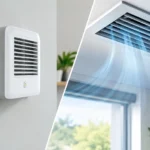
The first response is practical: use extractor fans while bathing and cooking, keep trickle vents open where fitted, dry laundry outside where possible, and maintain steady background heating during cold periods. A dehumidifier can be useful for drying clothes or bringing down short-term moisture levels. It is a tool for the air, not a repair for the building.
Do not overlook ventilation simply because a dehumidifier is running. If occupants create moisture faster than the appliance can remove it, mould may remain. Equally, excessive ventilation without sensible heating can leave surfaces cold, which can make condensation more likely. The aim is controlled airflow and a reasonably stable indoor temperature.
Signs that point to rising damp
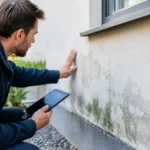
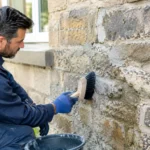
Rising damp is different. It involves ground moisture moving upwards through porous masonry. It normally affects ground-floor walls, basements and elevated ground-floor spaces, and is most often visible from floor level to around 1.5 metres high.
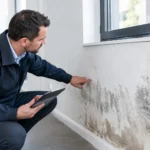
The pattern matters. Rising damp may show as a horizontal tide mark, bubbling paint, loose or crumbling plaster, salts on the wall surface, deteriorating skirting boards, or a persistent musty smell concentrated near the base of a wall. The wall can feel cold and remain affected even when the room is well ventilated.
Salts are a particularly useful clue. As moisture moves through masonry and evaporates, it can leave white deposits behind. These deposits may be powdery or crystalline. They are not proof on their own, because salts can come from other sources, but combined with low-level damage they warrant closer investigation.
A portable dehumidifier may reduce the room’s relative humidity and help exposed surfaces dry more quickly. However, it does not stop moisture travelling from soil into masonry. This is why some properties appear better during a dry spell, then show the same staining, flaking paint and damaged plaster again months later.
Check for other sources before choosing a remedy
Not every low-level damp patch is rising damp. A blocked gutter can soak an external wall. High outside ground levels can bridge protective layers. A leaking pipe beneath a floor can create a very localised issue. Cracked render, damaged pointing and poor drainage can allow rainwater to penetrate masonry.
Start outside where possible. Check that gutters, downpipes and drains are working, and that ground levels do not sit against vulnerable wall areas. Inside, look for plumbing leaks, particularly around kitchens, bathrooms, radiators and concealed pipework. Notice whether the damage worsens after heavy rain, which can point towards penetrating damp rather than rising moisture.
This step is not optional. A rising-damp solution should not be expected to cure a leaking roof, failed guttering or a burst pipe. Stop active water ingress first. Once obvious defects have been addressed, assess the remaining moisture pattern and the height of the damage.
Why a dehumidifier is not a rising-damp cure
A dehumidifier works by extracting water vapour from the air. It can make a room feel more comfortable, help laundry dry and reduce condensation risk. Those are worthwhile benefits when airborne humidity is the problem.
But walls affected by rising damp are being supplied with moisture from below. The appliance can only collect water after it has evaporated into the room. In effect, it manages part of the symptom while the source remains active. It may also need to run frequently, increasing electricity use and requiring regular emptying or drainage.
There is a useful place for dehumidification during a drying period, particularly after repairs or in a poorly ventilated space. The trade-off is simple: it is temporary air management unless the cause of water in the building fabric has been removed.
Address rising damp at the wall
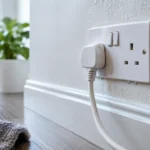
Where the evidence points to rising damp, the objective is to stop the upward movement of moisture rather than continually dry the air around it. GUARDIAN damp removal devices are designed for this purpose. They are plug-in electronic units intended to address the electrical-potential difference associated with moisture moving from soil into masonry, allowing existing moisture to return downwards through gravity as the wall dries.
The principle is easier to understand when compared with static electricity. A hairbrush can hold a charge that makes strands of hair move. Building moisture movement is more complex, but the device is designed to counter the electrical conditions that encourage water to travel upwards through the wall.
Correct placement matters. Like a Wi-Fi router, coverage works from the device position, so it should be located centrally for the area being protected and installed according to the selected model’s guidance. A family house may suit the HOME model, while larger homes and commercial premises may need PRO 15 or PRO 25 coverage. Choose for the building footprint and layout, not just the room where the staining is most visible.
Drying is gradual. Masonry that has held moisture for years cannot become dry overnight. Existing salts, damaged plaster and decorative finishes may still need attention once the wall has had time to dry. Keep the device operating continuously, maintain normal ventilation, and avoid covering affected walls with impermeable finishes while moisture is still leaving the fabric.
A practical way to respond today
First, identify whether you are seeing surface condensation, a building defect or a low-level rising-damp pattern. Then deal with the cause that fits the evidence. Improve ventilation and moisture habits for humidity. Repair leaks, rainwater goods and drainage issues for water ingress. For persistent low-level wall moisture consistent with rising damp, choose a source-focused solution and allow realistic drying time.
A dry-looking wall after a few days is not always a cured wall. The more useful test is whether the cause has been stopped and whether the building fabric can now dry naturally. That is how you protect the property, rather than simply emptying another tank of water.