A commercial damp device review should start with the wall, not the plug socket. If moisture damage begins at ground level and rises upwards, a commercial electronic damp device may be the right type of solution. If the problem is condensation from poor ventilation, a leaking gutter or a failed pipe, it is not. Getting that distinction right protects your budget and prevents months of treating the wrong problem.
For landlords, facilities managers and commercial property owners, damp is more than an untidy patch of paint. It can mean recurring mould smells, salt deposits, damaged plaster, cold ground-floor rooms and repeated decoration costs. The right device should offer practical coverage for the building, continuous operation and a realistic route to drying – without turning the site into a building project.
What a commercial damp device is designed to address
Electronic damp devices are intended for rising damp: moisture moving from the ground into porous masonry. Typical signs include damp or crumbling finishes up to around 1.5 metres from floor level, white salt marks, peeling paint and a persistent cold, clammy feel on lower wall sections.
The principle behind this type of equipment is straightforward to describe, even if the process happens inside the wall. The device produces a low-energy electronic field intended to counter the electrical-potential difference associated with moisture travelling upwards through masonry. Think of the static charge produced by a hairbrush: you cannot see it, but it can influence movement. The manufacturer’s claim is that, once this upward movement is stopped, moisture already in the wall can gradually return towards the ground through gravity.
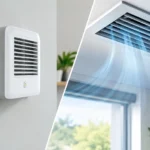
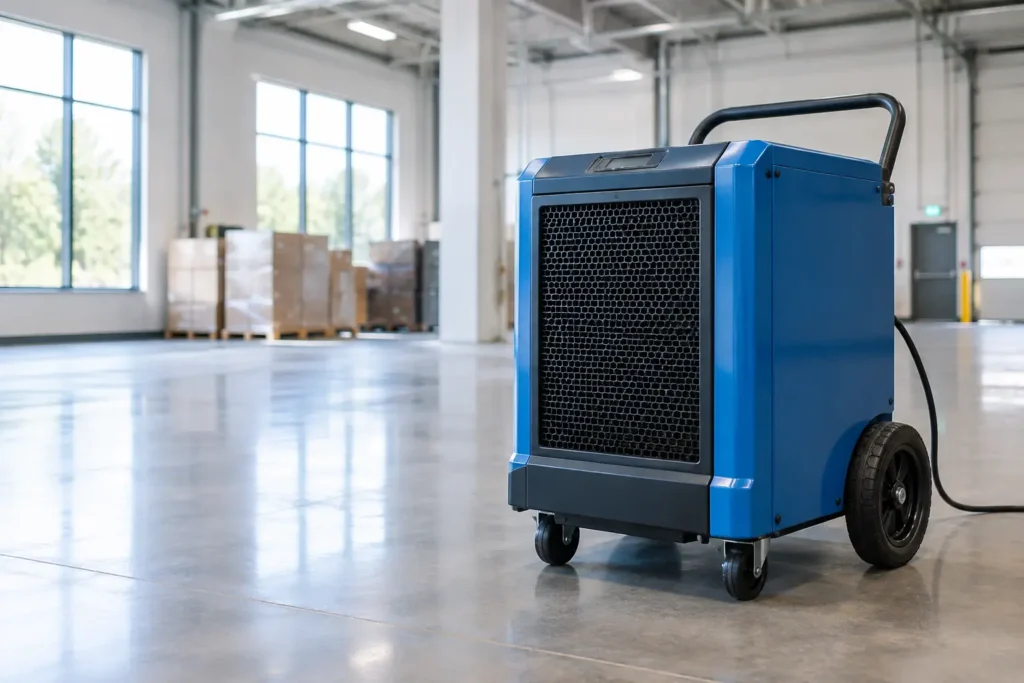
That is fundamentally different from an air dehumidifier. A dehumidifier removes water from the air in a room. It can be useful where condensation is present, especially in occupied spaces with limited ventilation. It does not, however, stop ground moisture entering a wall. If the wall remains supplied with moisture from below, the symptom will keep returning.
Commercial damp device review: the checks that matter
A good review is not about the flashiest casing or the longest promise. It is about whether the device suits the property and whether the diagnosis is sound.
Confirm that it is rising damp
Start with the pattern. Rising damp normally affects the lower section of a wall, particularly external walls and walls adjoining the ground. Damage is often most visible near skirting level and may rise gradually. Salts can remain even after the wall begins to dry, so do not judge progress solely by surface appearance.
Be cautious if damp appears high on a wall, around a window reveal, beneath a roofline or in one sharply defined area. Those patterns can point to penetrating rain, defective flashing, overflowing gutters, plumbing leaks or condensation. An electronic rising-damp device should not be used as a substitute for repairing those defects.
In a commercial building, several causes can exist at once. A poorly ventilated storeroom may have condensation while its perimeter walls also show rising damp. Address both causes rather than expecting one piece of equipment to solve every moisture issue.
Match coverage to the building footprint
Coverage is the first practical buying decision. Commercial premises are rarely one simple square room. They may include internal partitions, extensions, thick masonry, cellars, stairwells and separate ground-floor zones. A device needs to be selected around the area it must protect, not merely the size of the room where it will be mounted.
GUARDIAN offers PRO 15 and PRO 25 models for larger residential and commercial premises, with the model choice based on the required coverage radius and building layout. For a compact office, shop or converted house, one correctly positioned unit may be enough. A long building with multiple wings, or a property with a substantial extension, may need more than one device to avoid leaving distant areas outside the effective coverage zone.
Do not guess. Sketch the ground-floor plan, mark the affected walls and measure from the proposed mounting point to the furthest areas needing protection. Treat thick structural walls and separate building sections carefully. Electronic coverage is often compared with a Wi-Fi router: central placement gives the best chance of reaching the whole area, while unnecessary obstacles and distance can reduce effectiveness.
Look at installation, not just the device
One of the main advantages of a plug-in damp-management device is that it avoids chemical injection, hacking off walls or extensive disruption. That benefit only applies if installation is simple and correctly planned.
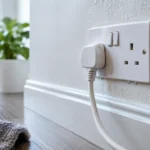
Choose a dry, accessible internal mounting location as close to the centre of the coverage area as possible. It should have a suitable electrical supply and remain powered continuously. Avoid hiding the unit behind dense metal cabinets, mounting it in a remote corner simply because there is a socket there, or placing it in an area vulnerable to water damage.
For managed premises, decide who owns the ongoing check. The device is designed for continuous use, so cleaners, tenants or contractors should not be unplugging it to use the socket for other equipment. A small label at the socket can prevent an avoidable interruption.
Assess running costs and practical disruption
A commercial solution needs to be affordable after installation as well as on day one. Plug-in electronic devices use low levels of electricity compared with many portable dehumidifiers, which can need regular emptying, cleaning and near-constant operation in stubborn damp conditions.
That does not mean a device removes every maintenance task. You still need working gutters, sound pointing, sensible ground levels and prompt leak repairs. It also makes sense to ventilate bathrooms, kitchens and drying rooms properly. Rising damp control and moisture management are related, but they are not the same job.
What results should you realistically expect?
Drying takes time. A wall that has held moisture for years will not become dry within a weekend. The rate depends on wall thickness, construction, internal heating, external weather, salts in the masonry and the amount of moisture already present.
Expect a gradual change rather than a dramatic overnight transformation. The musty smell may reduce before damaged paint and plaster look better. Existing salts can continue to show on finishes while residual moisture moves out. If plaster has become loose, contaminated or badly degraded, it may need repair after the wall has had time to dry.
Record the starting condition with dated photographs and moisture readings where suitable. Review the same points over several months. This gives a property manager evidence of change and stops normal drying variations being mistaken for failure. If the damp pattern worsens or spreads despite correct placement and continuous power, reassess the diagnosis for leaks, rain penetration or another source.
When a commercial damp device is a good fit
This approach is most suited to buildings with clear signs of rising damp in ground-contact masonry where owners want a non-invasive, continuously operating option. It can be particularly useful in occupied properties where major works would disturb tenants, customers or daily operations.
It is less suitable as a stand-alone answer for flood damage, active plumbing leaks, defective roofs or condensation caused by heavy indoor moisture production. In those cases, repair and ventilation work come first. Honest damp control begins with the cause, not with the product category.
A practical decision before you buy
Before selecting a commercial device, walk the site at ground-floor level. Note where damage begins, how high it reaches, whether it follows outside walls and whether rainwater goods, plumbing or ventilation could be involved. Then map the required coverage area and choose a central, permanent installation point with a reliable power supply.
The best result is not a device that merely makes a room feel drier for a few days. It is a properly matched system that gives moisture in affected masonry the time and conditions to reduce, while the building’s other defects are kept under control.